
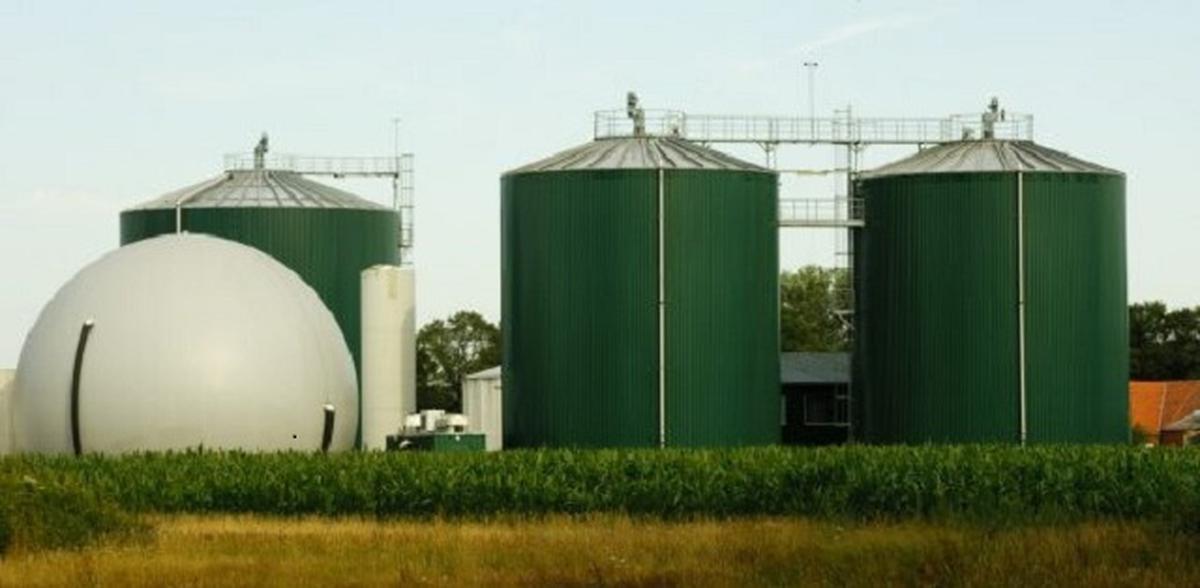

Why Community Biogas Matters in Rural India
Rural India faces persistent challenges with energy access and waste management. Millions of households still rely on firewood, crop residues, or other traditional biomass fuels, contributing to indoor air pollution, respiratory health issues, and environmental degradation. Simultaneously, organic waste - from livestock, kitchen scraps, and agricultural residues - often accumulates unmanaged, causing local pollution and greenhouse gas emissions.
Community biogas plants offer a solution that addresses both energy and environmental concerns. These plants convert organic waste into usable biogas for cooking, heating, or electricity and nutrient-rich slurry for agriculture, effectively turning a local challenge into an opportunity.
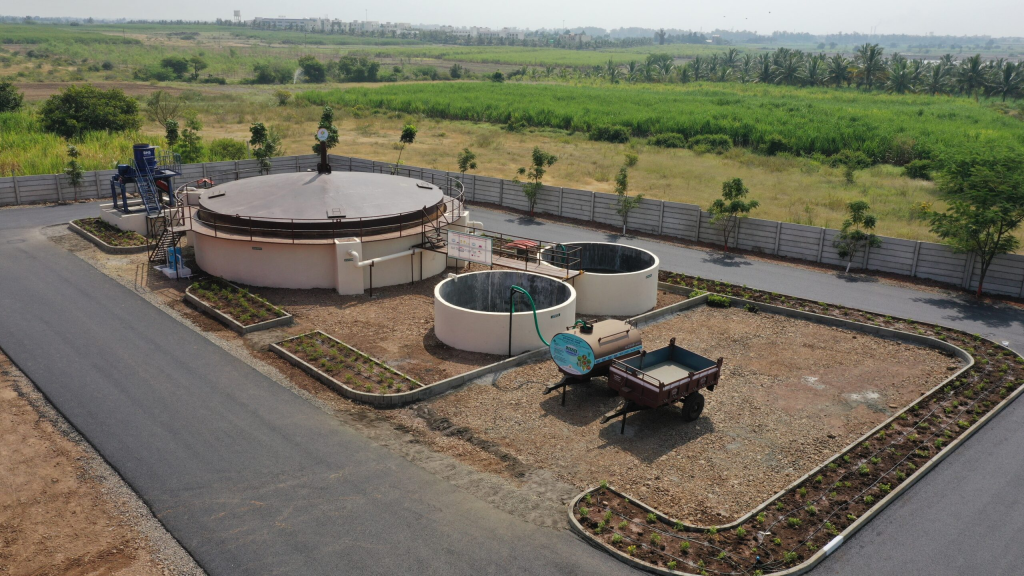
Local communities generate organic waste daily, which can be transformed into biogas for energy
By integrating biogas technology into rural livelihoods, communities can benefit from clean energy, reduced health risks, improved soil fertility, and new economic opportunities.
Current Challenges in Rural Biogas Adoption
Despite the promise, scaling community biogas plants comes with significant hurdles:
1. Feedstock Availability and Consistency
Many villages face seasonal variability in organic waste, which can affect biogas production. Reliable and sufficient feedstock is crucial for maintaining consistent energy output.
2. Technical and Operational Challenges
Small-scale digesters often encounter problems such as blockages, gas leaks, or uneven fermentation. Many communities lack local technical expertise for routine maintenance and troubleshooting.
3. Financial Barriers
Initial capital costs for constructing a digester, gas piping, and storage facilities can be prohibitive. Maintenance costs, though moderate, also require financial planning and community buy-in.
4. Policy and Implementation Gaps
While government subsidies and programs exist to support rural biogas, challenges remain in awareness, implementation, and monitoring. Many projects falter when there is limited community engagement or lack of ongoing technical support.
5. Behavioral and Cultural Factors
Adoption can also be influenced by local perceptions about technology, fuel preferences, or attitudes toward shared infrastructure. Education and awareness campaigns are often needed to promote behavioral change.
Key Barriers to Rural Biogas Adoption
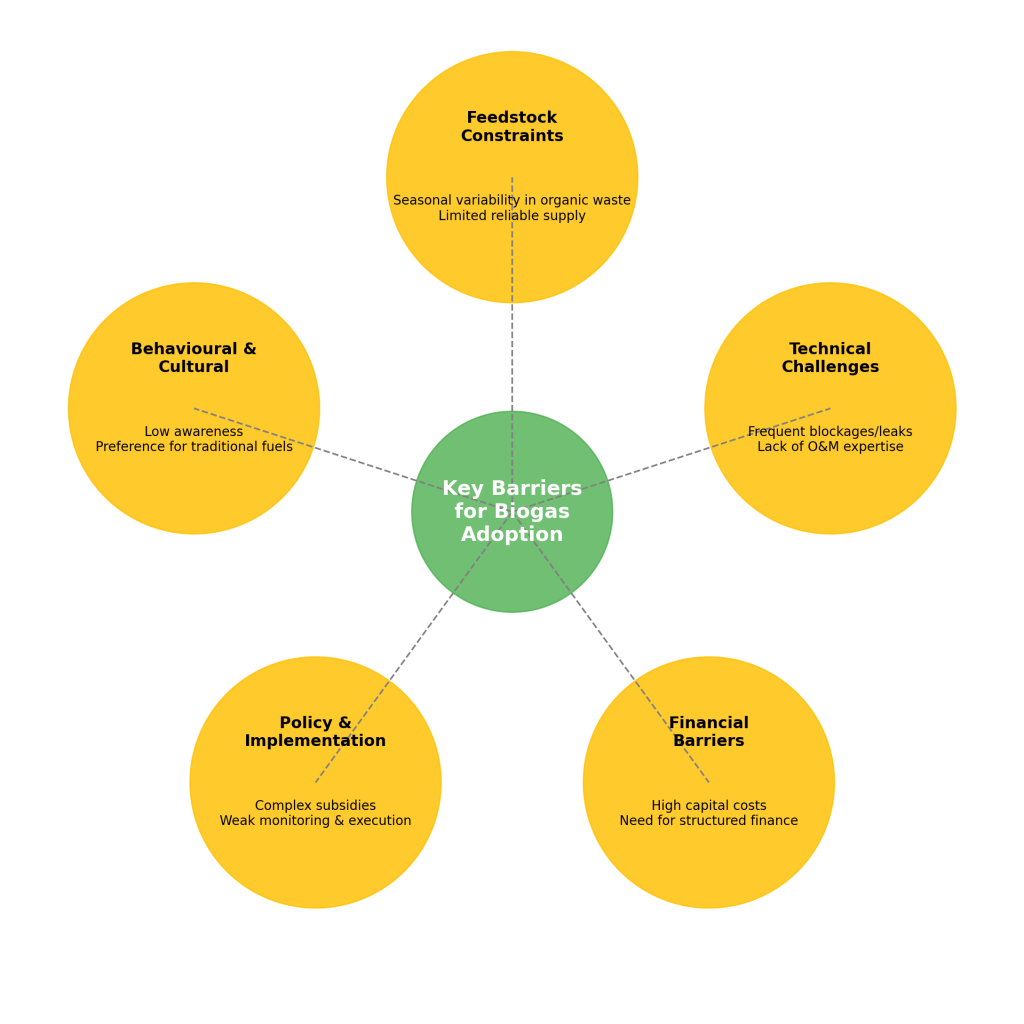
Addressing these challenges requires a holistic strategy that combines engineering solutions with social mobilization, financial planning, and supportive policy frameworks.
Technical Insights: How Community Biogas Plants Work
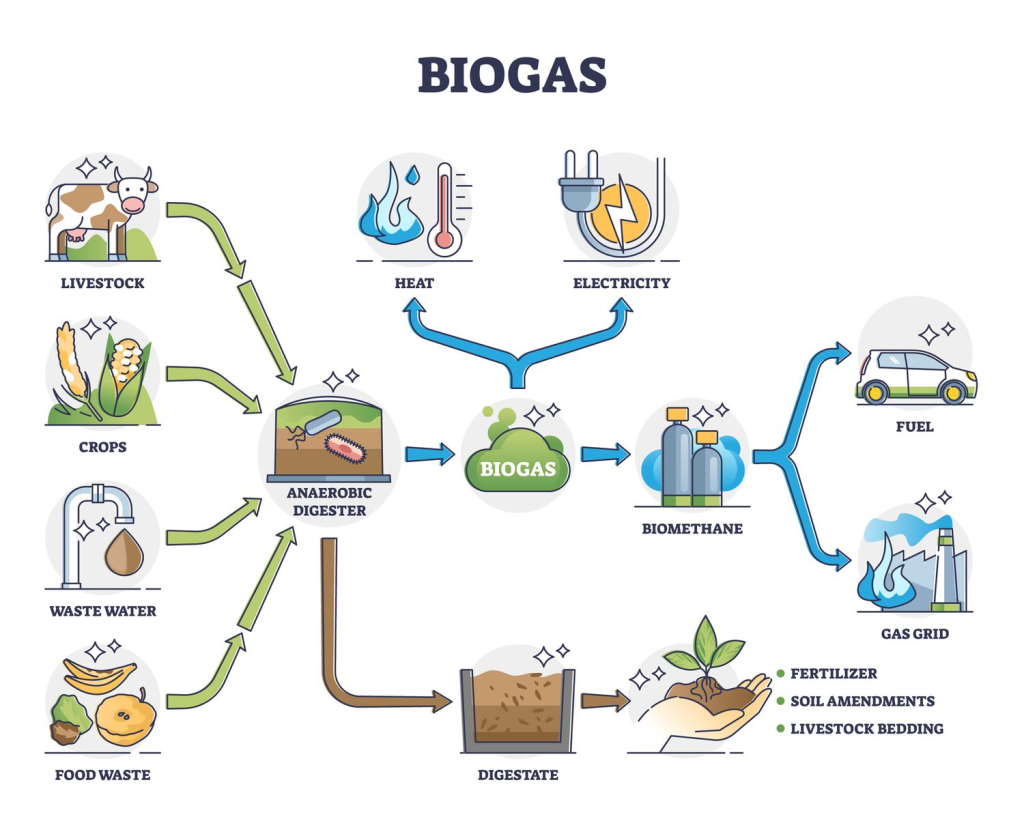
At their core, community biogas plants rely on anaerobic digestion, a biological process where microorganisms break down organic matter in the absence of oxygen to produce methane-rich biogas and nutrient-dense slurry.
Feedstock Types
Common feedstock sources include:
- Livestock manure (cows, buffaloes, goats)
- Kitchen and food waste
- Crop residues (straw, husks)
- Small-scale agro-industrial organic byproducts
Digester Designs
Two primary designs are used for community-scale applications:
- Fixed-Dome Digesters: Permanent underground structures with a gas storage dome. Durable, low maintenance, suitable for small-to-medium communities.
- Floating-Drum Digesters: Above-ground drums that rise and fall with gas pressure. Easier to construct but require more frequent maintenance.
The capacity of the digester depends on the number of households, waste availability, and energy demand. Proper sizing ensures consistent gas production and system longevity.
Gas Collection and Utilization
Methane-rich biogas can be used for:
- Cooking in communal kitchens or household stoves
- Running small engines for electricity generation
- Lighting street lamps or community facilities
Fertilizer and Nutrient Recovery
The slurry left after digestion is an excellent organic fertilizer, enhancing soil fertility and reducing dependence on chemical fertilizers. When applied correctly, it can improve crop yields while reducing water and soil pollution.
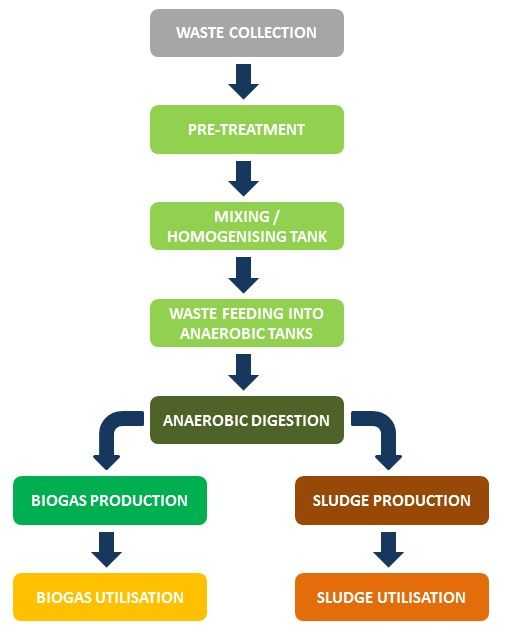
Simplified representation of biogas production and nutrient recovery processes
Case Study: Madhya Pradesh Pilot Project
A successful community biogas project in Madhya Pradesh highlights practical outcomes and replicable strategies:
- Digester Size: 15 cubic meters, serving 25 households
- Biogas Output: ~2,500 cubic meters per year
- Cost Savings: Households reduced fuel expenses by 20–25%
- Waste Utilization: Organic waste from households and farms fully utilized, reducing open dumping and methane emissions
Key success factors included community engagement, operator training, and regular monitoring. The project demonstrates that with proper planning, community biogas plants are not only technically feasible but also economically and socially impactful.
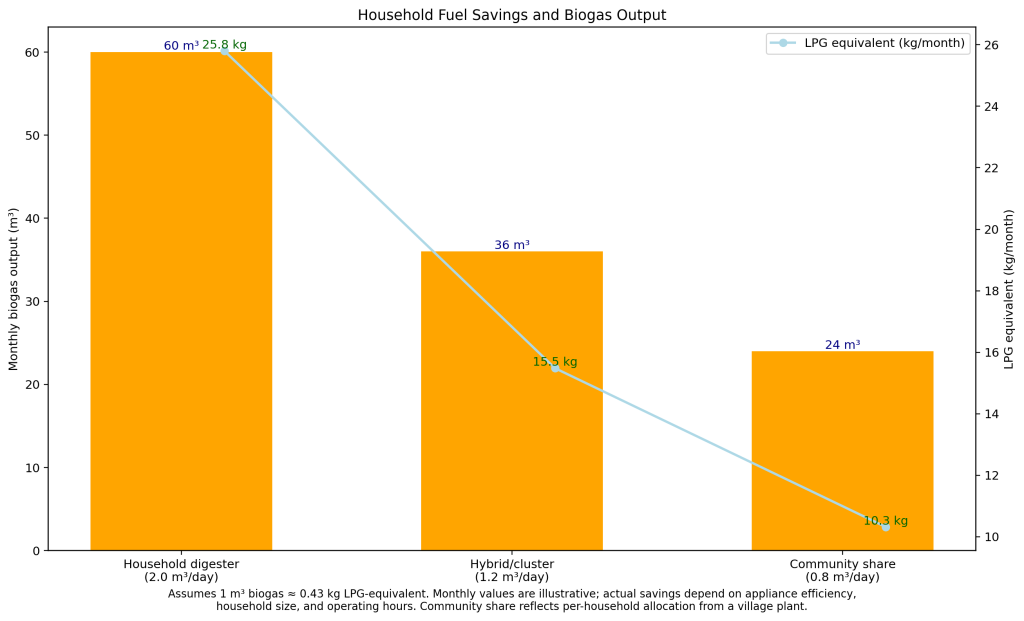
Quantitative benefits of the pilot project in energy and cost savings
Scaling Community Biogas: Practical Guidelines
For communities and organizations interested in replication:
1. Resource Assessment
Identify the quantity and types of organic waste available and estimate potential energy output. Map local energy needs to determine system size.
2. Technology Selection
Choose digester design based on community size, maintenance capacity, and budget. Consider modular designs for scalability.
3. Community Engagement
Train local operators, create shared ownership structures, and encourage active participation to ensure long-term sustainability.
4. Financial Planning
Combine government subsidies, microfinance options, or CSR funding to make initial investment feasible. Include a budget for maintenance and contingency.
5. Monitoring and Optimization
Track gas production, digester performance, and fertilizer usage to identify operational issues early and optimize output.
6. Integrating with Local Agriculture
Use biogas slurry to enhance crop yields, promote organic farming, and generate additional income streams.
Socio-Economic and Environmental Impact
Community biogas plants offer multi-dimensional benefits:
- Health Benefits: Reduced smoke and indoor air pollution improve respiratory health.
- Environmental Benefits: Reduced deforestation, controlled organic waste, and lower methane emissions.
- Economic Benefits: Lower household fuel costs, increased agricultural productivity, and potential for micro-enterprises using biogas energy.
- Social Benefits: Empowerment through shared infrastructure, skill development, and community cohesion.
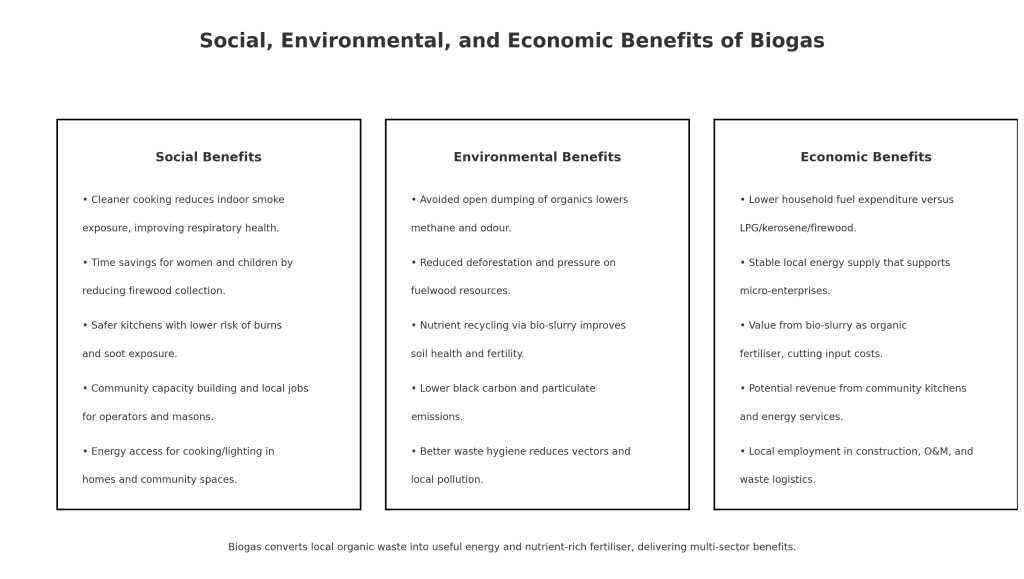
Community biogas systems generate measurable benefits across multiple domains
Policy and Innovation Opportunities
While community biogas is proven at the pilot scale, large-scale adoption requires:
- Streamlined government subsidy programs
- Support for technical training and capacity building
- Innovation in low-cost digester designs
- Integration with rural microgrids and local energy cooperatives
Investors and entrepreneurs have an opportunity to de-risk biogas projects through monitoring technologies, modular systems, and maintenance support models, making community-scale adoption more feasible
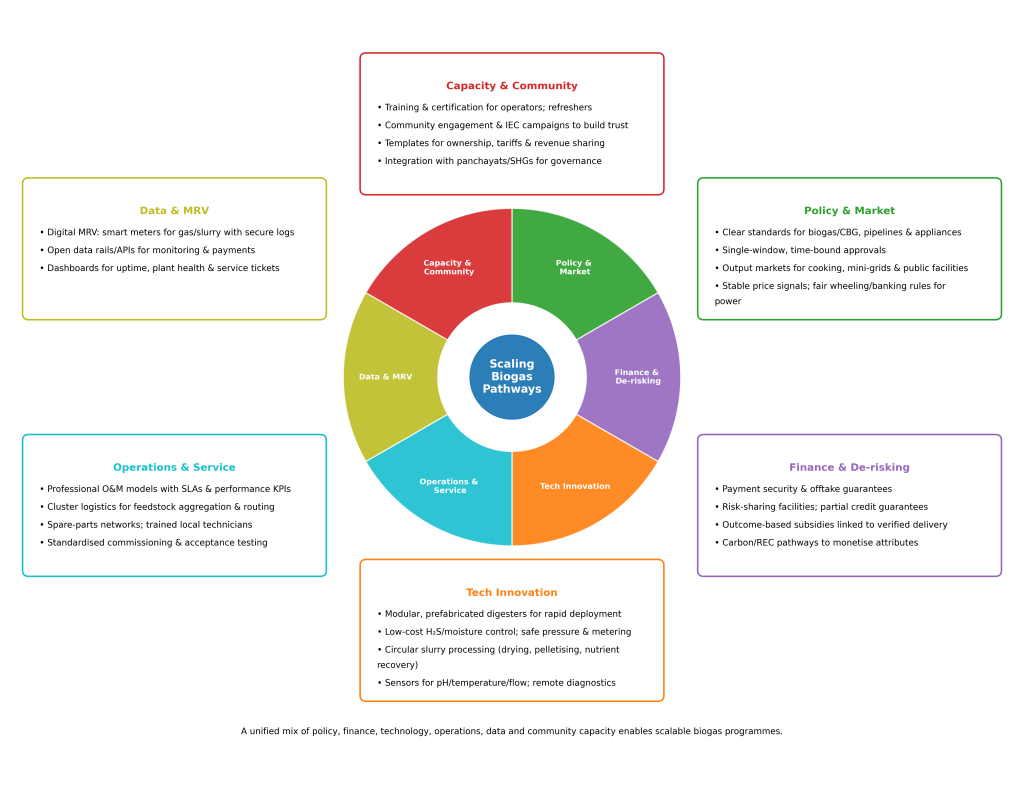
Combining technology, policy, and investment to scale rural biogas adoption
Future Outlook
Community biogas is a strategic tool for rural development, addressing energy, agriculture, and waste management in one integrated solution. With growing awareness of renewable energy and sustainability, biogas can play a central role in rural India’s green transition.
The path forward is clear: invest in replicable models, engage local communities, and leverage biogas for both energy and environmental benefits. Communities that adopt these systems today will be better positioned to meet energy demands, improve agricultural productivity, and reduce environmental impact.
This helps us meet our climate goals. 🎯
Appreciate it Lakshmi! 🔄
Great breakdown of greenhouse gas emissions Neeraj! Exactly what our ESG team needs
Excellent breakdown of energy efficiency measures
Appreciate it Nisha!
Excellent breakdown of energy efficiency measures
Appreciate your kind words! Really appreciate you reading
Thanks Neeraj for the clear energy transition roadmap. 🗺️
Very helpful Karan!
Great work on the climate data breakdown Neeraj!