

The Pivotal Moment for India’s Urban Energy
India is at a critical juncture in its clean energy journey. Urban energy demand is soaring due to rising populations, economic activity, and the electrification of transport and appliances. At the same time, climate commitments are pushing the nation toward a low-carbon pathway.
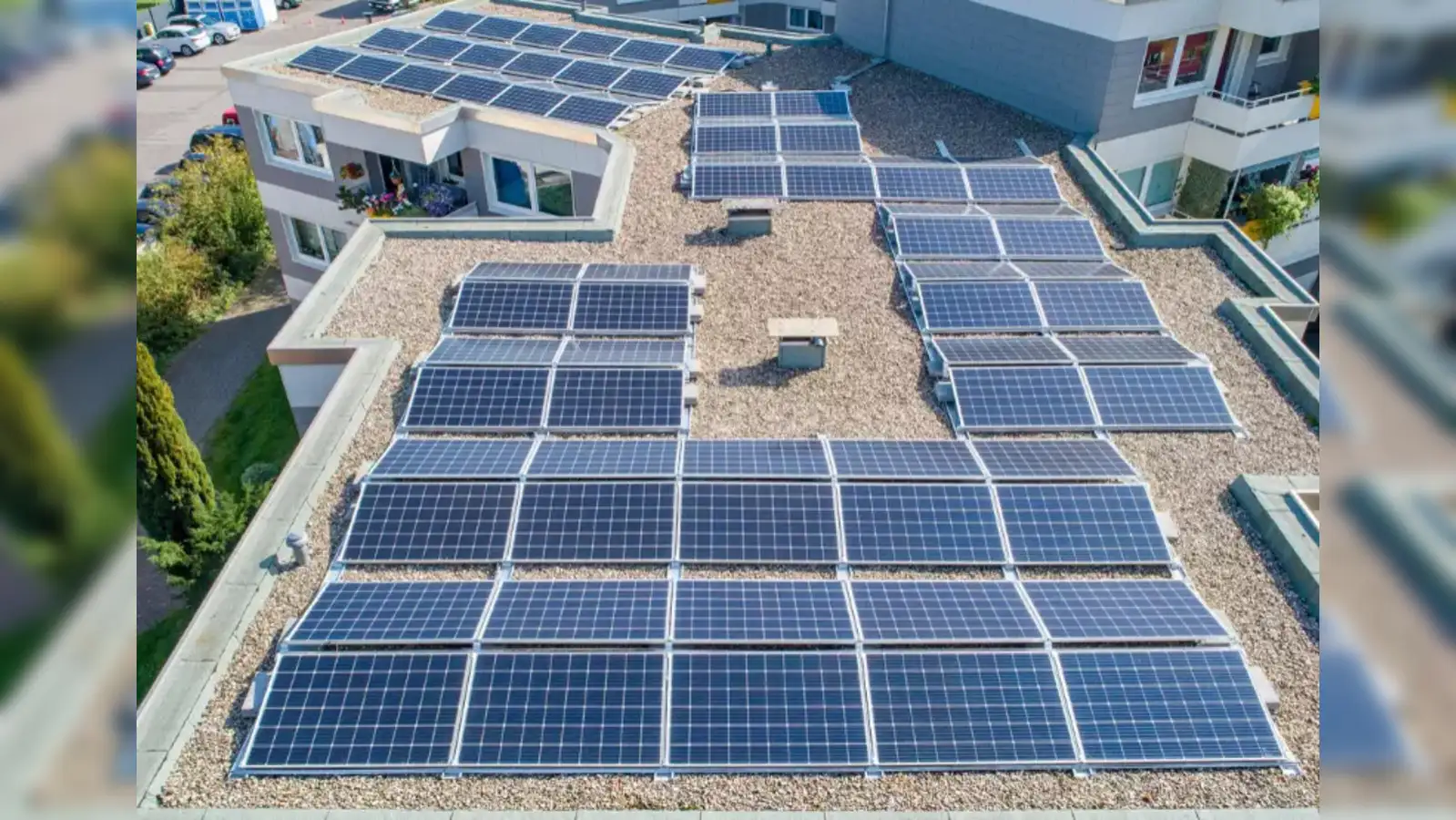
While utility-scale solar projects - like the Bhadla Solar Park in Rajasthan - are vital, they require vast tracts of land, a scarce resource in densely populated cities. This makes urban rooftops the next frontier for India’s solar revolution. Distributed generation through rooftops not only reduces dependency on centralized infrastructure but also empowers citizens to become active participants in energy generation.
Recent policy initiatives, most notably the PM Surya Ghar: Muft Bijli Yojana, demonstrate a recognition of this potential. The scheme, with its focus on subsidized rooftop solar for residential households, reflects a strategic pivot toward decentralized energy.
Despite these advances, rooftop solar adoption faces persistent barriers: financial, regulatory, and technical. Enter solar roofscapes and flexible PV - technologies designed to overcome these bottlenecks and integrate clean energy seamlessly into urban life.
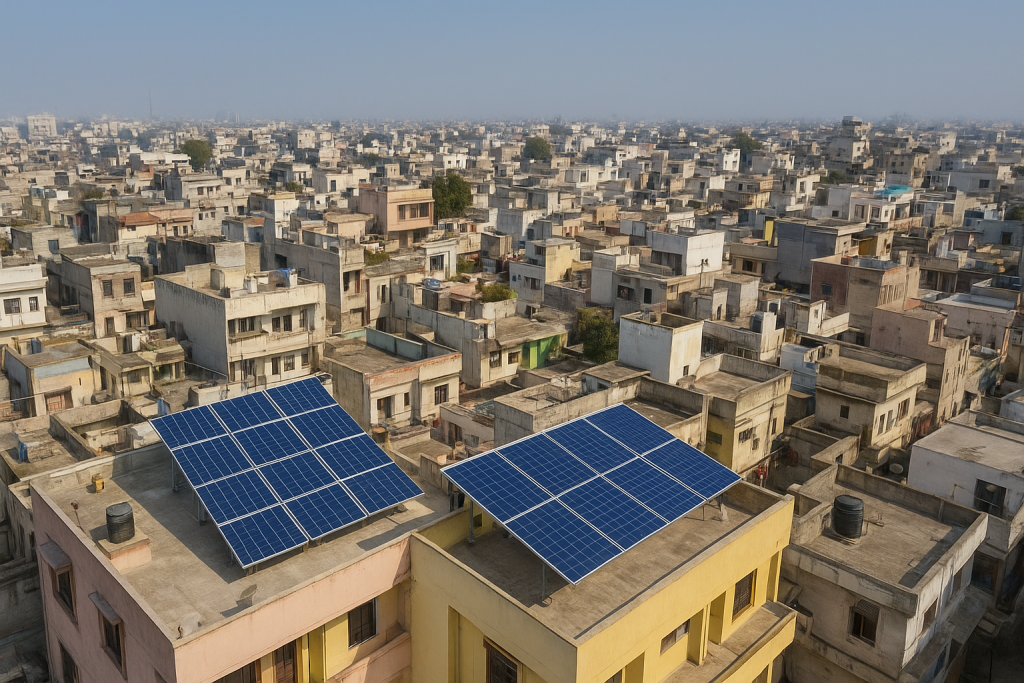
Urban rooftops hold immense untapped solar potential for India’s energy transition.
The Challenges of Conventional Rooftop Solar
Financial Hurdles
Upfront costs remain a major deterrent for many households. Traditional rooftop systems can cost between ₹1–2 lakh per kW, with payback periods stretching 7–10 years. Even with government subsidies, many banks are reluctant to finance small-scale projects due to perceived risks. Loan rates can reach 14–15%, further disincentivizing adoption.
Regulatory Complexity
Rooftop solar policies vary widely across states. Differences in net metering rules, interconnection standards, and inspection protocols introduce confusion and delay. This inconsistent landscape makes it difficult for homeowners and developers to plan projects with confidence.
Urban Physical Constraints
Rooftop shapes in India are often irregular and shaded, and the presence of water tanks or other rooftop utilities adds to installation challenges. In apartment complexes, shared ownership creates additional administrative hurdles. Traditional panels are bulky, making rooftops less usable for social or functional purposes and sometimes visually unappealing.
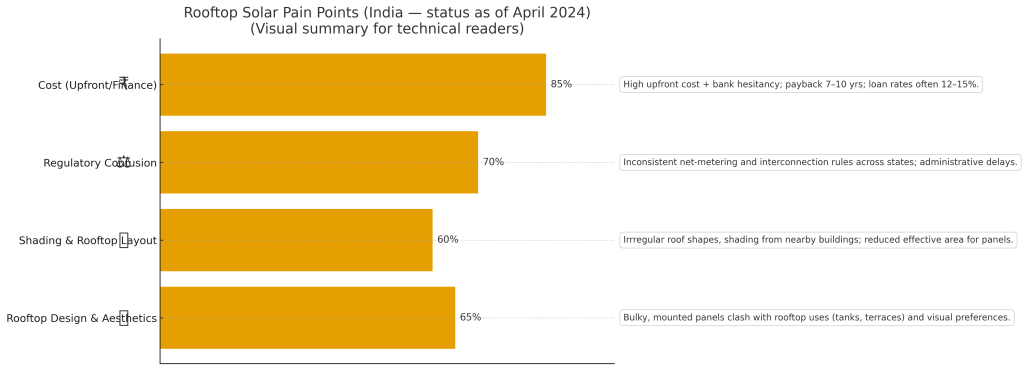
Common barriers to conventional rooftop solar adoption in India.
Solar Roofscapes: Building-Integrated PV (BIPV)
What Are Solar Roofscapes?
Solar roofscapes replace conventional roofing with Building-Integrated Photovoltaics (BIPV) - where the solar modules themselves act as the roof. This approach transforms a rooftop into an active energy-generating surface, while maintaining a sleek, minimalist aesthetic.
Advantages:
- Dual functionality: Acts as both roof and power generator, reducing material costs.
- Enhanced efficiency: Integrated design can host more panels per square meter by eliminating mounting gaps.
- Better thermal management: Improved airflow reduces heat buildup, maintaining panel efficiency.
BIPV allows urban rooftops to be functional, efficient, and visually appealing, overcoming many of the challenges that have historically slowed adoption.
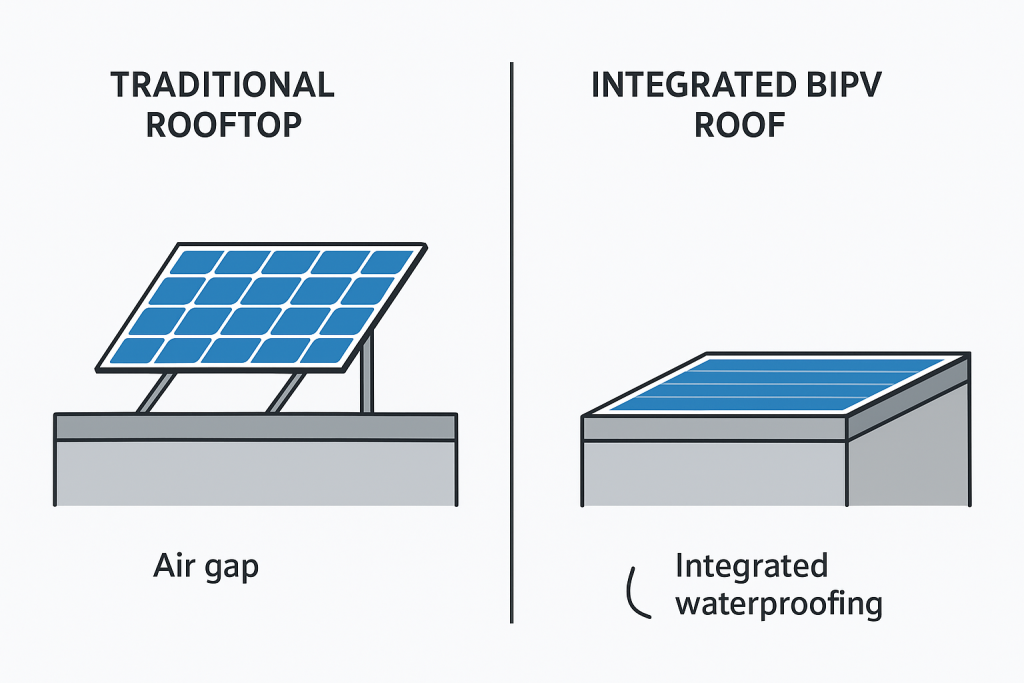
BIPV turns a roof into a seamless, power-generating surface.
Financial Perspective
While initial costs for BIPV are slightly higher than conventional panels, the combined cost of roofing and solar often makes it a better long-term investment. For commercial buildings, industrial warehouses, and new residential developments, this can be particularly compelling.
Flexible PV: Unlocking Unconventional Surfaces
The Technology
Flexible PV panels are thin, lightweight, and bendable, opening possibilities for non-standard surfaces: curved rooftops, vehicles, temporary structures, and mobile units.
Key Advantages:
- Weight: Only ~20% of traditional rigid panels.
- Versatility: Can conform to unconventional surfaces and structures.
- Durability & efficiency: Advances in tandem-cell technology are narrowing the gap with rigid PV, providing longer lifespans and higher efficiency.
Flexible PV could power refrigerated delivery vans, electric rickshaws, or bus shelters, transforming urban mobility and logistics into solar-enabled infrastructure.
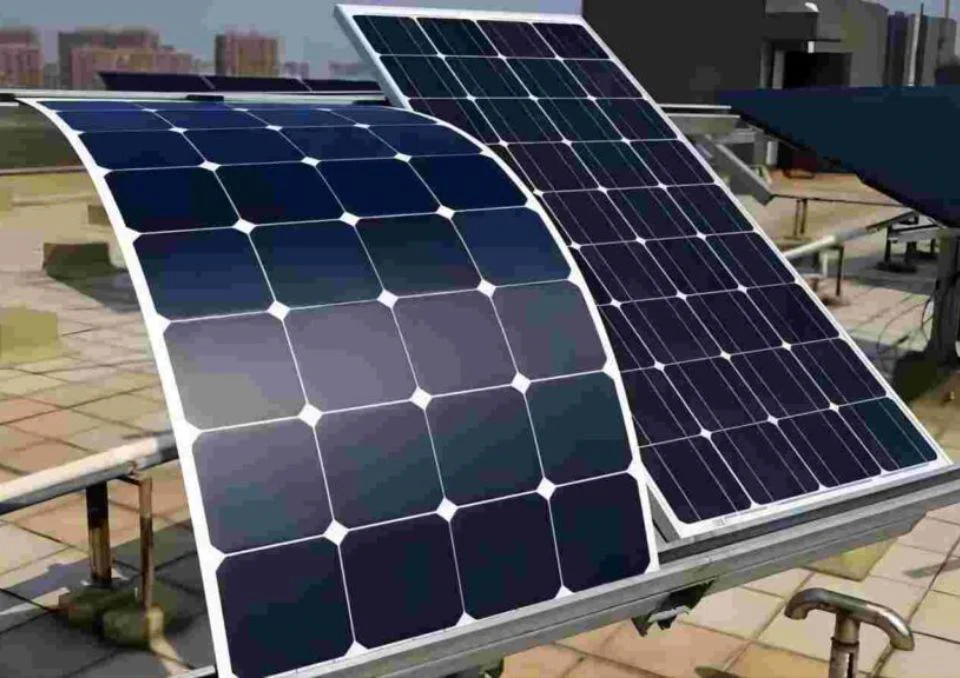
Flexible PV expands the reach of solar to unconventional spaces.
Case Studies: Making It Real
Ornate InRoof: India’s Integrated Solar Solution
The Ornate InRoof system is among India’s first commercially successful BIPV solutions.
- Jindal Steel Power (Odisha): 3.25 MW system spanning 197,000 sq. ft.
- Nhava Sheva Port (Navi Mumbai): 641 kW system expected to generate 1,100 MWh annually, offsetting 23,000 tons of CO₂.
These projects highlight that integrated solar solutions can be both aesthetically pleasing and operationally superior, boosting efficiency while reducing construction costs.
Global Innovations
Europe is experimenting with vehicle-integrated PV (VIPV), showing that cars could generate up to 50% of their annual energy needs via solar. India’s abundant sunlight and growing EV sector amplify the potential impact, making flexible PV particularly promising for commercial fleets and last-mile delivery.
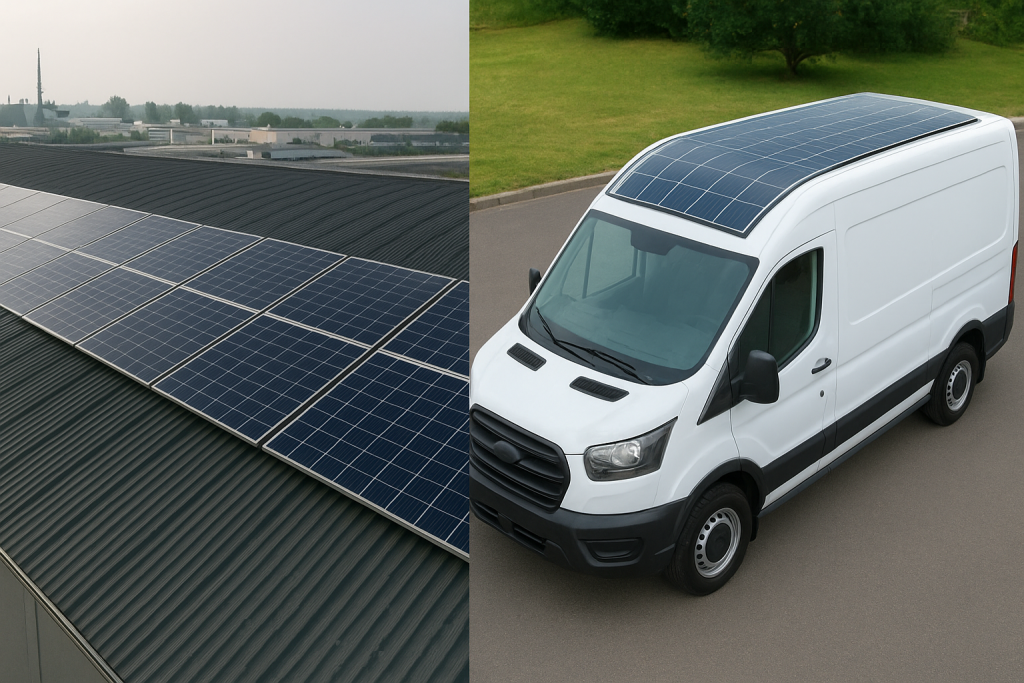
From industrial rooftops to mobile applications, solar integration is expanding rapidly.
Actionable Strategies for Scaling Rooftop Solar
Policymakers & Urban Planners
- Harmonize regulations nationally to reduce confusion and administrative delays.
- Incentivize integrated systems such as BIPV or storage-linked installations.
- Adopt advanced metering models (time-of-use or gross metering) to align incentives for both consumers and DISCOMs.
Homeowners & Housing Societies
- Leverage government programs like the PM Surya Ghar scheme to offset costs.
- Consider OPEX/RESCO models or Deferred Payment Agreements to reduce upfront expenditure.
- For new constructions or renovations, BIPV can replace conventional roofing, turning an essential building component into an energy asset.
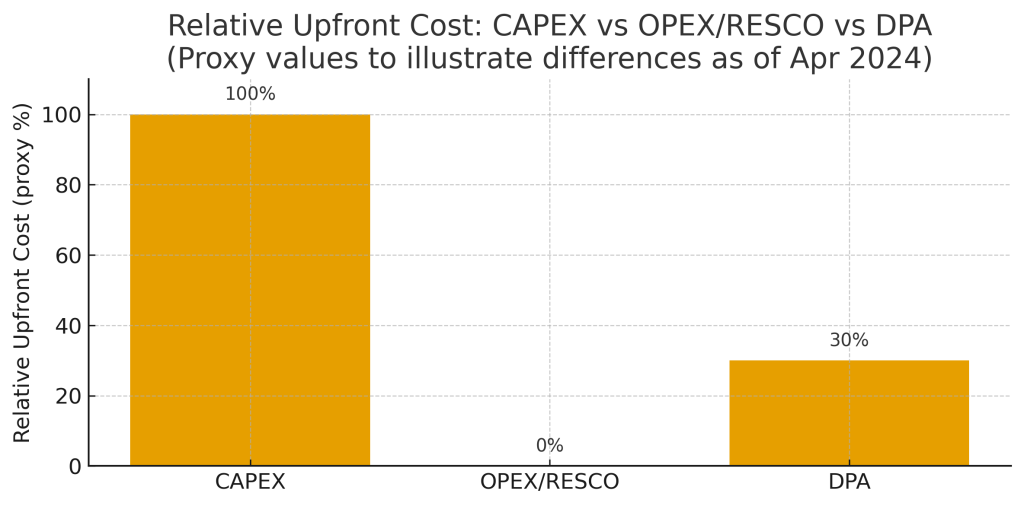
Multiple business models make solar adoption flexible and accessible.
Framework for Urban Rooftop Planning
- Assessment: Evaluate roof area, orientation, shading, and structural capacity.
- Technology Selection: Decide between BIPV, flexible PV, or conventional panels.
- Financial Planning: Choose CAPEX, OPEX, or DPA model depending on resources.
- Integration: Design for aesthetics, airflow, and maintenance access.
- Monitoring & Optimization: Install smart inverters or energy management systems for peak efficiency.
This stepwise approach ensures that solar rooftops deliver maximum energy output with minimal disruption to urban life.
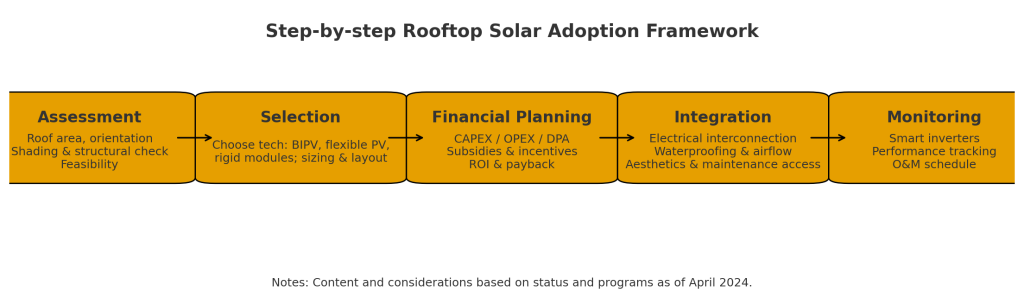
A structured approach to adopting rooftop solar in urban settings
Conclusion: A Solar-Integrated Urban Future
India’s rooftop solar landscape is evolving rapidly. Traditional panels, while foundational, are being complemented by innovative roofscapes and flexible PV, enabling rooftops to become energy-producing, aesthetically integrated, and functional spaces.
The convergence of Indian policy, domestic manufacturing, and global technological advances positions the country to capitalize on its solar potential. The opportunity is immediate: as cities grow, as fleets electrify, and as rooftops multiply, these solutions will define urban energy for decades.
The message is clear: India’s energy future isn’t just solar-powered - it’s solar-integrated. The rooftop revolution is rising, and every panel, flexible or integrated, contributes to a more resilient, decentralized, and aesthetically coherent urban energy ecosystem.
Love seeing data on energy conservation. 💚
Thank you for your input! Really appreciate your comment
Thanks Neeraj for highlighting carbon reduction opportunities
Thank you Nisha!
Essential reading for climate professionals. 🌱
Super helpful Manish!
Great resource for clean energy transformation Neeraj!
This is a game-changer for emission tracking! 🎯
Fantastic resource for carbon strategy! This will help with our climate goals 💚
Fantastic resource for renewable integration! Essential for our net zero strategy 🔋
This helps us meet our climate goals. 🎯
Appreciate it Kritika! 😊
Fantastic insights on emission reduction! Perfect for our sustainability reporting 📉
Thank you Siddharth!
This is perfect for our climate action plan. 🎯
Thanks for being here! Really appreciate your thoughts
Excellent perspective on renewable integration
Thanks Rahul! 💚
Thanks for the clear carbon management strategies
Super valuable Vikram!
Really valuable for sustainability governance. 🌱
Appreciate your engagement! Glad it helped
Great breakdown of energy transition pathways! 💡
Thank you Kritika!
This is exactly what we need for climate strategy!
Much appreciated Priya!