

From the phone in your hand to the scooter on your street…
Batteries run our world. Quietly and Relentlessly. You barely notice them until something dies then suddenly, they are everything. These are the backbone of India's digital development like mobile, electric vehicle ,renewables and many others.
Here’s the simple truth: as we rush toward electric mobility and clean energy, we have built our dreams on a foundation that is beginning to show cracks. Now the real challenge of India is not just going green but to make our energy future bright and reliable also.
Lithium-ion batteries were once the holy grail. Now? They’re showing their limits. And India, if it’s smart, will treat that as a wake-up call, not a roadblock.
Storage isn’t a luxury anymore. It’s the glue that holds the renewable dream together. Think of it like water harvesting , saving when there is plenty and using when there’s none. Without proper energy storage, our solar panels and EVs are just expensive ornaments.
India’s double peak that punishing afternoon and evening demand isn’t just a technical quirk. It’s a structural headache. And until we solve storage, the clean energy transition stays half-finished.
Why Lithium-Ion Can’t Be the End of the Road
Lithium-ion batteries deserve their fame. due to having high energy density, rechargeable, relatively cheap. They made your phone possible and your EV plausible. But they’re no longer enough. Four big cracks are now impossible to ignore.
1. Supply Chain Volatility
Here’s the problem that India barely has any lithium, cobalt, or nickel to mine. And who refines most of what the world uses? China. That’s not just a number on a chart; it’s a real point of dependence. Every EV policy, every subsidy, every unit of stored power today relies on supply chains that aren’t in our hands.
It’s like depending on someone else’s power connection , if they turn it off, you’re suddenly left in the dark.
2. Rising Costs
Remember 2021? Lithium prices didn’t just rise but they skyrocketed. Some months saw 40% jumps. Try scaling affordable EVs in that climate. It’s unsustainable. For a price-sensitive market like India, this volatility doesn’t just sting; it stalls progress.
3. Safety Risks
Let’s not mince words , lithium-ion batteries can catch fire. Rare, yes, but public perception doesn’t care about statistics when an EV burns on the news. The flammable electrolyte, the thermal runaway — one bad headline and consumer trust melts faster than the battery pack.
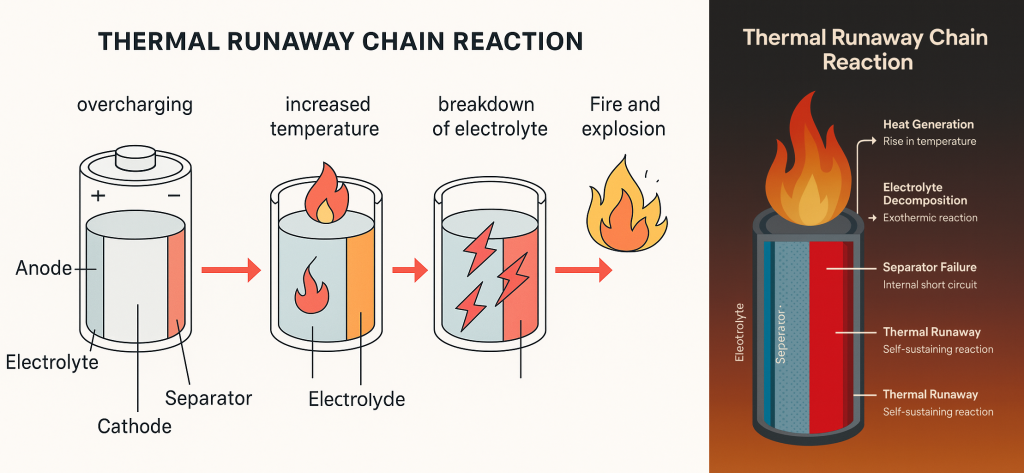
Safety risks of lithium-ion—rare but reputation-damaging.
4. Recycling Gaps
And then there’s the graveyard issue. The world simply doesn’t recycle batteries fast enough. By the time millions of EVs hit retirement, we’ll be staring at a mountain of waste and a shortage of minerals. For a country with few natural reserves, not recycling isn’t just wasteful , it’s reckless.
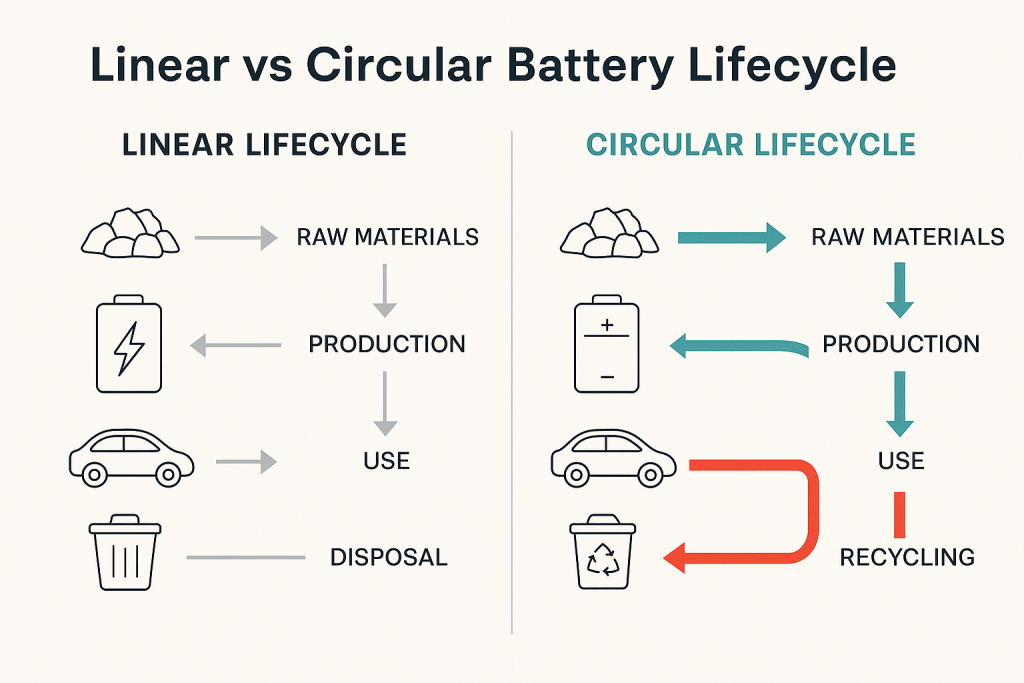
“take-make-dispose” model must evolve into a closed-loop system
Next-Generation Batteries: What Comes After Lithium-Ion
The future won’t belong to a single chemistry. It’ll be a mosaic — different technologies for different needs. Let’s unpack the front-runners.
Solid-State Batteries – Safety Meets Performance
Solid-state tech sounds like science fiction: no flammable liquid, double the energy density, and possibly a full charge in under 20 minutes. It’s safer, denser, and faster. But, of course, there’s a catch. Making these batteries on a large scale is extremely difficult. Tiny metal spikes called dendrites can damage the cells, the layers don’t always hold up well, and the costs are still very high
Yet, Toyota, Samsung, and a bunch of start-ups are pushing through. In a hot country like India, that built-in safety advantage isn’t just convenient but it’s essential.
Sodium-Ion Batteries – Abundance Over Scarcity
Now, sodium-ion is cheaper, safer, and made from salt, one of Earth’s most abundant resources. It doesn’t care about geopolitics. It doesn’t rely on rare minerals. Certainly , it’s less energy-dense. You won’t power a long-range SUV with it anytime soon. But for two and three-wheelers , the bread and butter of Indian mobility , sodium-ion could be a game changer.
Reliance seems to think so too. Their 2021 buyout of UK-based Faradion wasn’t just a headline but it was a declaration.
Flow Batteries – Designed for the Grid
Flow batteries don’t even pretend to fit in your car. They’re built for the grid — massive tanks storing liquid electrolytes that can run for 8–12 hours straight.
They are easy to scale up, long-lasting, and most importantly safe. Ideal for India’s solar-heavy grid with high evening demand. Think of it as storing extra sunlight during the day and sending it back to the grid at night , that’s how flow batteries work.
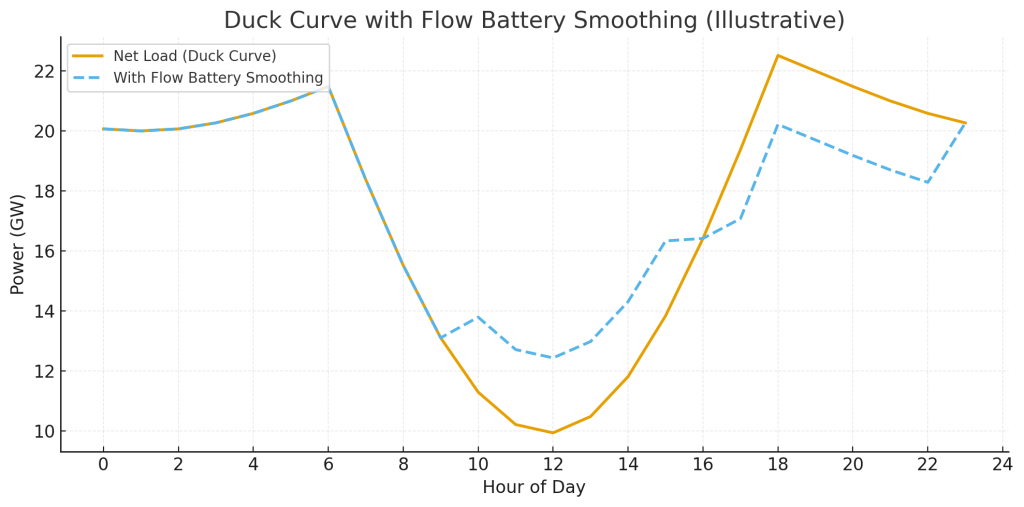
Flow batteries flatten India’s renewable energy curve.
India’s 2021 Momentum: Policy & Pilots
India’s not waiting around. 2021 was the year the groundwork began.
The PLI Scheme – A Policy Backbone
The government’s ₹18,100 crore Production Linked Incentive (PLI) scheme for Advanced Chemistry Cells is more than a funding program , it’s a statement. Build here, build fast, build deep.
Targets?
- 50 GWh of domestic capacity by 2030.
- 25% local value-add within 2 years, 60% in 5.
- Incentives tied not to assembly lines but to genuine manufacturing depth.
For once, policy’s chasing substance, not slogans.
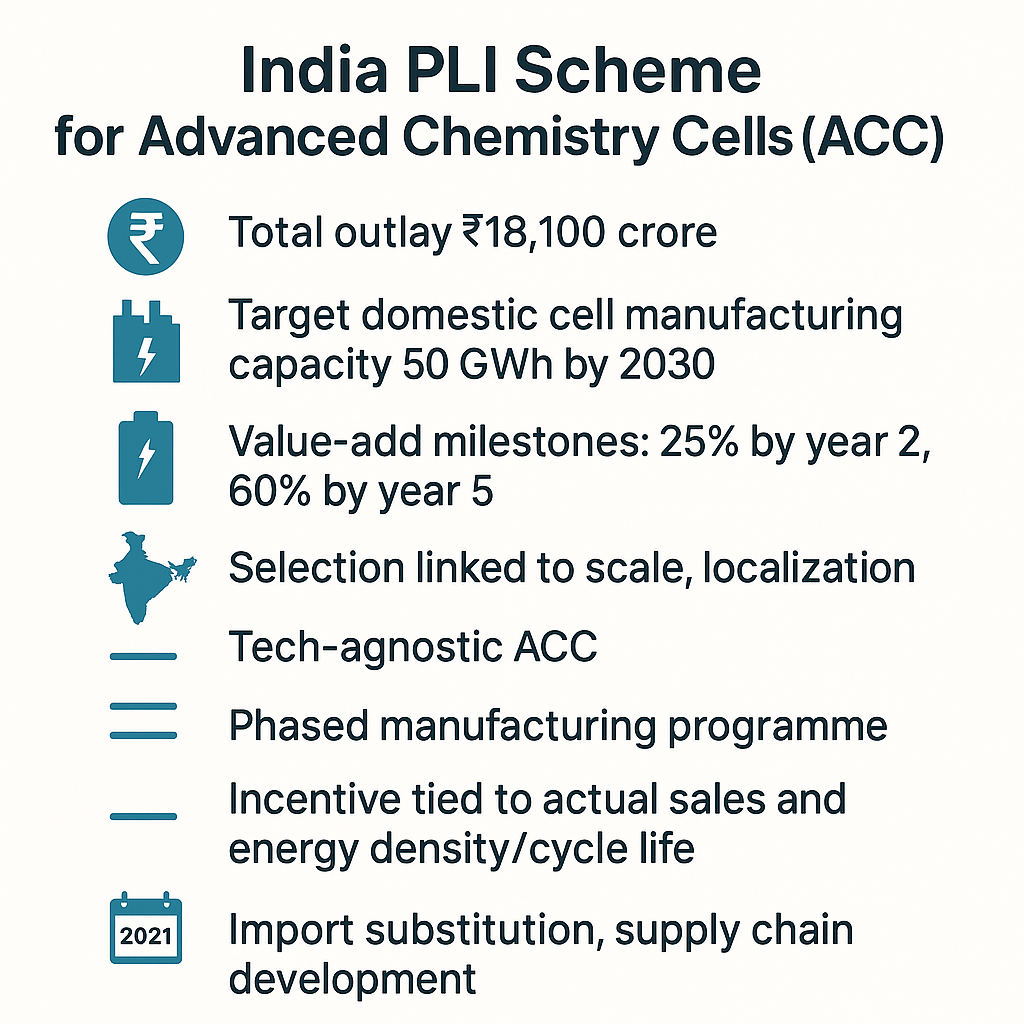
India’s PLI scheme aims to build scale, speed, and self-reliance.
Corporate Action – Reliance Leads the Way
Reliance Industries didn’t just dip its toes; it cannonballed in. ₹75,000 crore for a new energy ecosystem, from giga-factories to sodium-ion tech and green hydrogen. When India’s largest private conglomerate bets big on new chemistry, you pay attention.
Pilots on the Ground – Tata Power & LiNa Energy
Meanwhile, Tata Power teamed up with LiNa Energy to trial solid-state sodium batteries right here in Delhi. No air-conditioned labs, no hypotheticals — actual field conditions, real heat, real stress. And it works. That’s how innovation should look — scrappy, local, proven.
Actionable Pathways for India
So, what is the next action? Technologically It is not complicated but it requires teamwork. Everyone from government leaders to start-ups has a role to play.
Policymakers:
Stop worshipping lithium-ion. Spread the love (and the incentives) across sodium-ion, flow, and whatever else comes next. Fund R&D like our future depends on it because it does.
Start-ups & Industry:
Find your niche. Partner globally. Localise aggressively. India doesn’t have to reinvent every wheel , just adapt them faster and cheaper.
Consumers & Utilities:
Support innovation. Try community storage models, virtual power plants, anything that decentralises energy resilience. Don’t wait for policy . Push for pilots, show the savings.
India doesn’t need to outspend the world on lithium-ion. We need to outthink it.
The Road Ahead: Balancing Hope with Reality
By late 2021, India hit an inflection point. The lithium dream isn’t dead , it’s just evolving. Every weakness has become a spark for reinvention. We have got:
- Policy momentum (the PLI scheme).
- Corporate muscle (Reliance, Tata).
- Real pilots proving new tech works on Indian soil.
The next decade will decide whether India stays a buyer or becomes a builder. And the direction we are heading? It’s starting to look promising.
The future won’t be a single “winner” battery. It’ll be a mix of solid-state for high-performance EVs, sodium-ion for affordable mobility and grid storage, flow for the long game. Together, they’ll shape something bigger than clean energy .
Great breakdown of emission reduction tactics Neeraj!
Thanks Preeti!
Great breakdown of renewable energy sources! This aligns with our decarbonization plans
Love the emphasis on clean technology
Extremely insightful! Glad you enjoyed it
This is perfect for our environmental goals Neeraj