
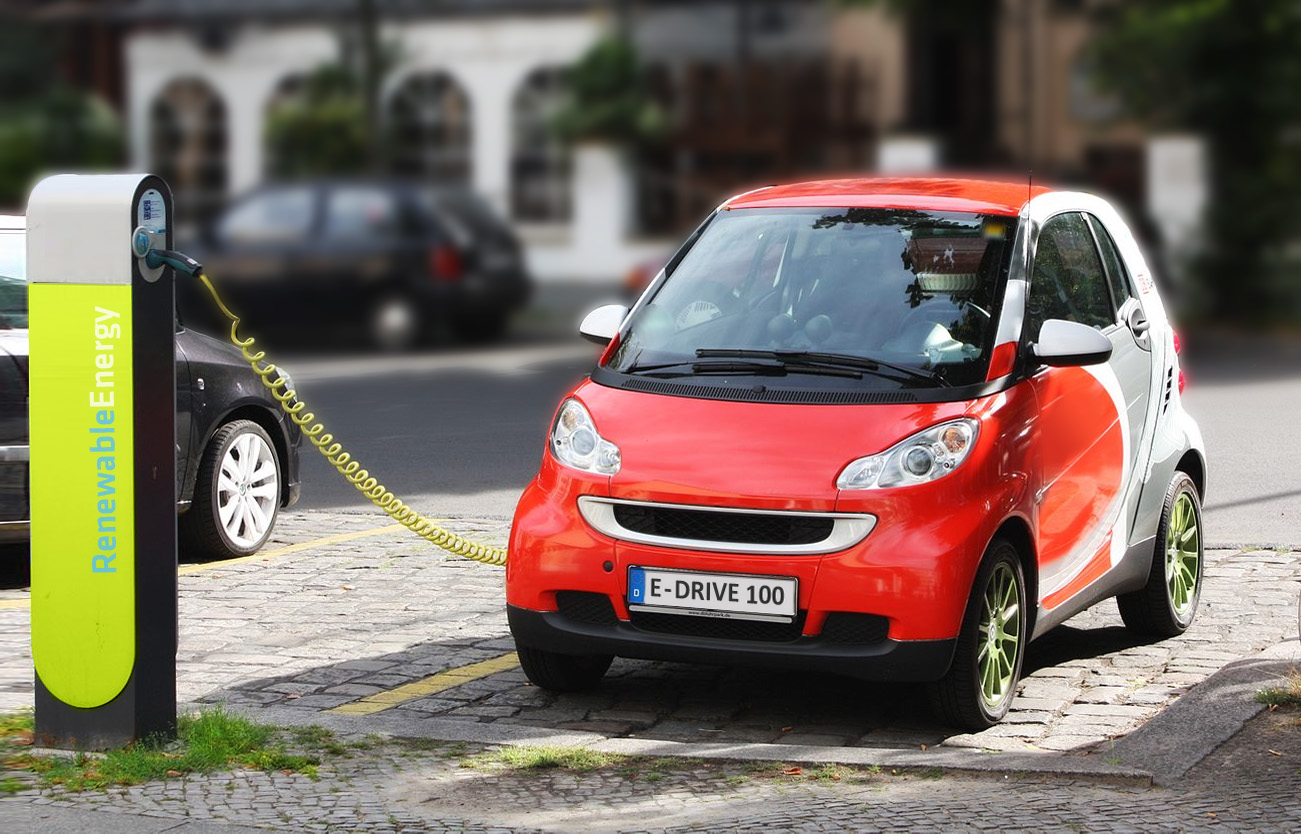

A New Urgency for India’s Cities
In recent years, India’s cities have been waking up to a hard truth: the air we breathe is making us sick. The haze over Delhi in winter, the rising levels of particulate matter across metros, and the growing concern from public health experts have transformed vehicular pollution into a mainstream conversation.
At the same time, India has placed itself on the global stage by signing the Paris Agreement, committing to cut emissions intensity and expand non-fossil electricity generation. These international promises now meet the lived experience of our crowded, traffic-clogged cities.
Electric mobility has quickly moved from being a futuristic concept to a strategic imperative. For India, the question is not whether EVs will arrive, but whether our electric grid is ready to support them.
India’s Power and Mobility Paradox
Here lies India’s paradox:
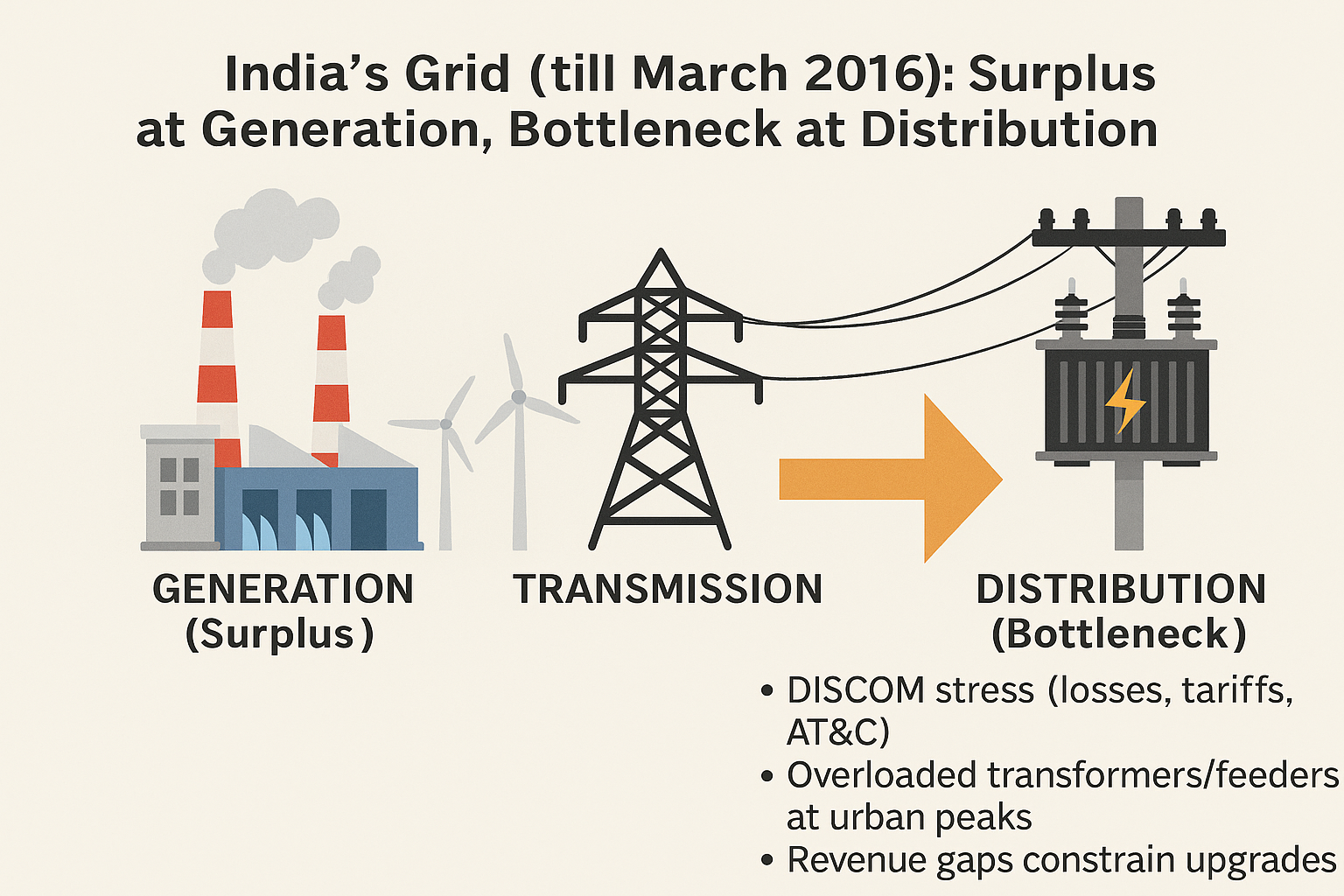
- On paper, we are a power-surplus nation. By the end of 2015, generation had finally outpaced demand.
- In reality, demand is artificially low. Distribution companies (DISCOMs) remain financially fragile, weighed down by subsidies, high technical losses, and expensive power contracts.
So when people say, “India has enough power to fuel electric vehicles,” the truth is more complicated. Yes, the generation capacity is there. But the last-mile delivery system is weak, stretched thin, and financially unsustainable.
Now add EVs into the picture.
- Best case: predictable new demand strengthens DISCOM revenues.
- Worst case: unmanaged charging overloads transformers and deepens instability.
This is the knife’s edge India must walk: EVs could either heal the power sector or strain it further.
Global Momentum: Lessons for India
While India debates readiness, the rest of the world is already moving.
- China: Surpassed 350,000 EV sales in a single year, supported by aggressive subsidies and local manufacturing push.
- Norway: One in four cars sold is already a plug-in, thanks to smart incentives like free tolls, tax breaks, and access to bus lanes.
- United States & Europe: Piloting smart charging programs to balance grid loads.
These examples highlight two truths:
- Policy drives adoption.
- Infrastructure and incentives must go hand in hand.
India’s EV numbers in comparison are modest, with adoption largely in two- and three-wheelers, and the Mahindra e2o standing as a lone electric car experiment. But this small base also means India can leapfrog mistakes others made - if it moves decisively.
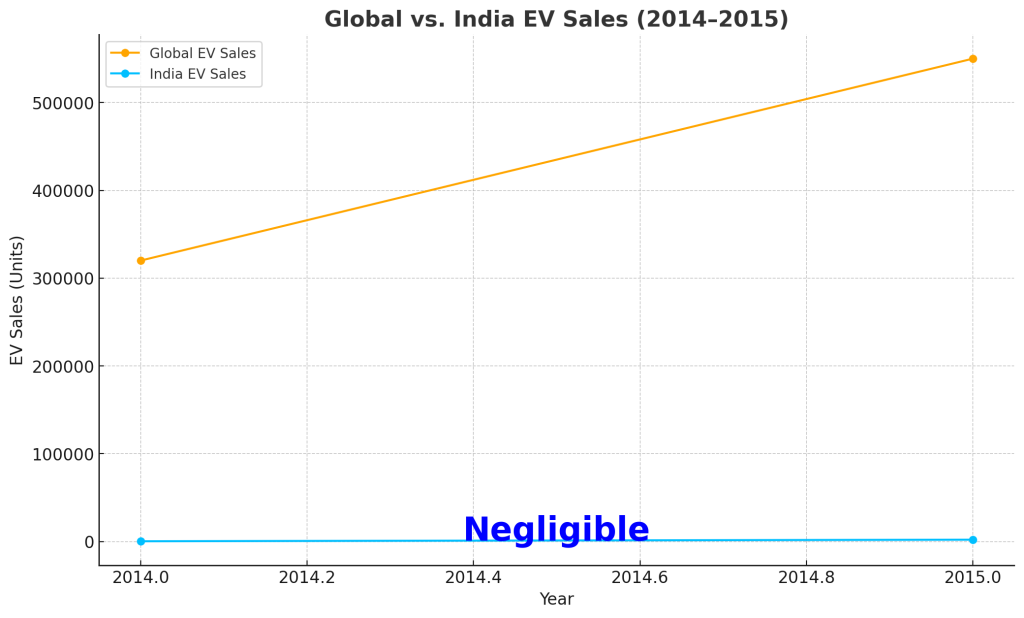
India is just beginning its EV journey while global markets accelerate
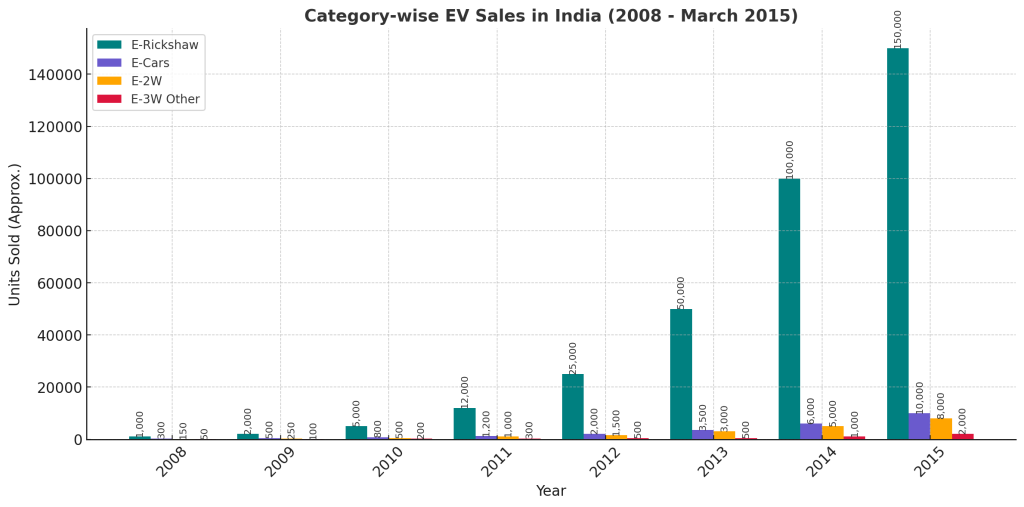
In India, only the sales of E-rickshaws are significant, while sales of other electric vehicles remain negligible.
Policy Foundations: FAME and Smart Grids
Two government initiatives form the backbone of India’s EV ecosystem today:
- FAME India (Faster Adoption and Manufacturing of Hybrid & Electric Vehicles)
- Incentives for EV buyers, manufacturers, and charging infrastructure.
- Early support for ~100,000 EVs and hybrids by 2016.
- Focus on building demand and local capacity.
- National Smart Grid Mission (NSGM)
- Operationalized in early 2016.
- Focus on modernizing distribution, deploying smart meters, and preparing for EV charging networks.
Together, they represent an ecosystem approach: FAME creates the demand; NSGM prepares the supply.
But both are still in pilot mode, with modest budgets. The real test is whether they can scale quickly enough to match the ambition.
The Coming Impact on India’s Grid and DISCOMs
The Challenge: Evening Peaks and Urban Load Stress
Most EV owners are likely to plug in after work, right when India’s grid already faces its evening peak. If charging is unmanaged, local transformers and feeders could quickly get overwhelmed. This isn’t hypothetical - early pilots in cities have already revealed surprise load spikes from clustered charging.
The Opportunity: EVs as Grid Assets
But EVs are not just consumers of power; they can be part of the solution.
- Time-of-Use Tariffs (ToU): Encourage off-peak charging at night, flattening the demand curve.
- Vehicle-to-Grid (V2G): Cars as distributed batteries, feeding power back into the grid during peaks.
- Grid Flexibility: EV demand could help integrate renewables like solar and wind by soaking up surplus generation.
For DISCOMs, the question is strategic: Will they treat EVs as a burden to be managed or an asset to be leveraged?
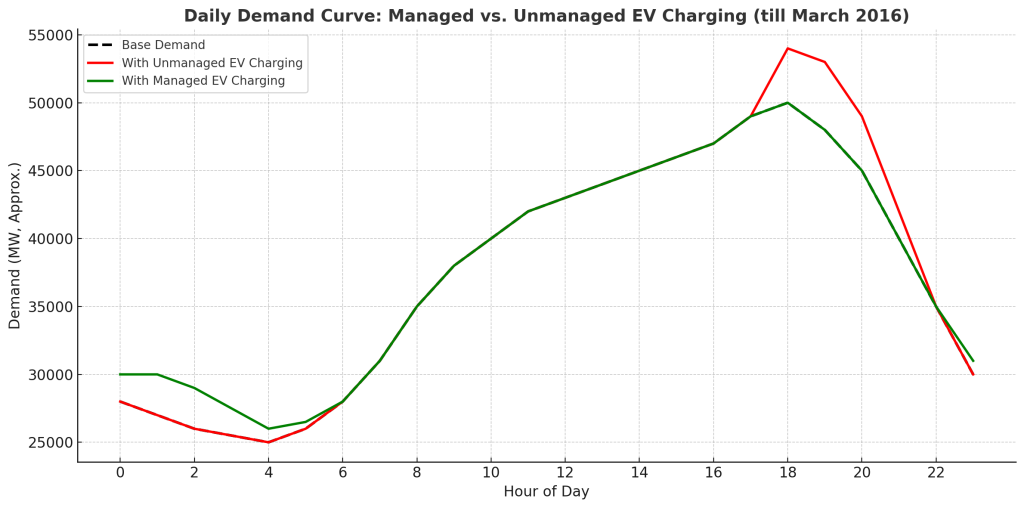
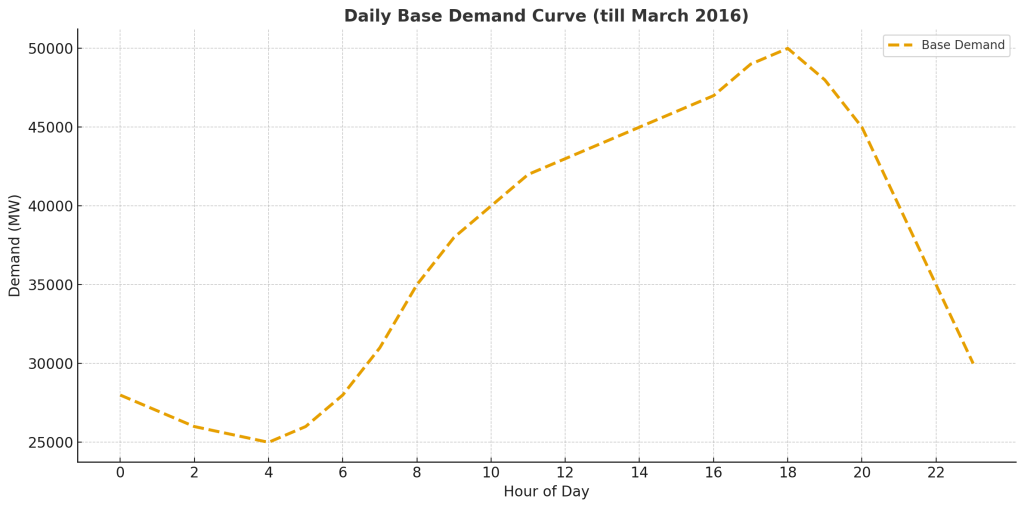
Note-The charts I created uses illustrative / hypothetical data, not actual raw grid demand figures from 2008–2016. I constructed it using typical load curve shapes for India’s grid and layered in stylised EV charging loads (managed vs. unmanaged) to show the contrast.
The Auto Industry: Beyond Cars, Toward Ecosystems
India’s auto industry is ambitious, guided by the Automotive Mission Plan 2016–26. But when it comes to EVs, the challenges are sharp:
- High upfront costs keep EVs niche.
- Range anxiety makes consumers hesitant.
- Sparse charging infrastructure creates the chicken-and-egg trap.
Emerging Solutions
- Battery Leasing: Separate the cost of batteries from vehicles to lower purchase prices.
- Battery Swapping: Particularly promising for two- and three-wheelers, enabling quick “refueling” at swap stations.
- City Pilot Programs: Concentrate EV fleets in a few metros, especially in public/shared transport, to prove the model before scaling.
The auto industry must shift focus from just selling cars to building an ecosystem - charging, financing, and after-sales services all bundled in.
Consumers: Breaking Barriers of Cost and Trust
For consumers, EV adoption hinges on two questions:
- “Can I afford it?”
Even with subsidies, EVs remain pricier than conventional vehicles. For a cost-sensitive market like India, this is a major barrier. - “Will it get me where I need to go?”
Early EV ranges are enough for daily commuting, but perception matters. Range anxiety looms large, especially with a limited public charging network.
Changing Habits
The reality is that most EV charging will happen at home overnight. Public charging should be seen more as a safety net for longer trips than a daily necessity. Framing charging as a new routine, not a risk, is critical to winning trust.
The Two- and Three-Wheeler Advantage
India’s unique mobility pattern - dominated by scooters, bikes, and rickshaws - makes smaller EVs the real game-changers. With battery swapping and fleet models, adoption could scale far faster here than with private cars.
Opportunities vs. Risks: The Strategic Balance
The Opportunities
- Cleaner cities, healthier citizens.
- Lower oil import dependence and stronger energy security.
- New domestic industries: batteries, components, assembly, services.
- Job creation across the EV value chain.
The Risks
- Grid overload without smart charging.
- Fragmented charging infrastructure without standards.
- Slow private investment due to unclear policy signals.
The stakes are high. Success requires clear rules, investment-friendly policies, and coordination across ministries, regulators, and industry players.
The EV transition is a balancing act of opportunity and risk
What Leaders Must Do Now
Policymakers: From Incentives to Mandates
- Move from subsidies to clear targets and timelines.
- Adopt the “saturation model”: electrify entire city fleets instead of scattering efforts.
- Build blended financing mechanisms to reduce capital costs for buses and shared fleets.
DISCOMs: From Operators to Enablers
- Invest in smart meters, demand response, and automated monitoring.
- Roll out time-of-use tariffs to spread out charging demand.
- Partner with private firms to expand charging networks instead of trying to build everything in-house.
Industry: From Cars to Ecosystems
- Localize R&D for batteries and components.
- Innovate business models: swapping, leasing, fleet services.
- Collaborate with policymakers and DISCOMs to create a coherent ecosystem.
The Road Ahead: Writing India’s EV Story
The EV transition is not just about cleaner cars; it’s about redesigning how we power our cities. The FAME scheme and the Smart Grid Mission have set the stage. The question is whether India can act boldly enough, fast enough, and collaboratively enough to turn pilots into scale.
The rewards are clear:
- Cleaner skies.
- Stronger energy independence.
- A globally competitive domestic industry.
The call to action is simple but urgent: the time to build EV readiness is now.
Thanks Neeraj for highlighting the sustainability aspects
Thank you for the! Very valuable
Thanks Neeraj for the clear decarbonization pathways
This helps quantify our decarbonization progress. 📈
Really appreciate your thoughts