
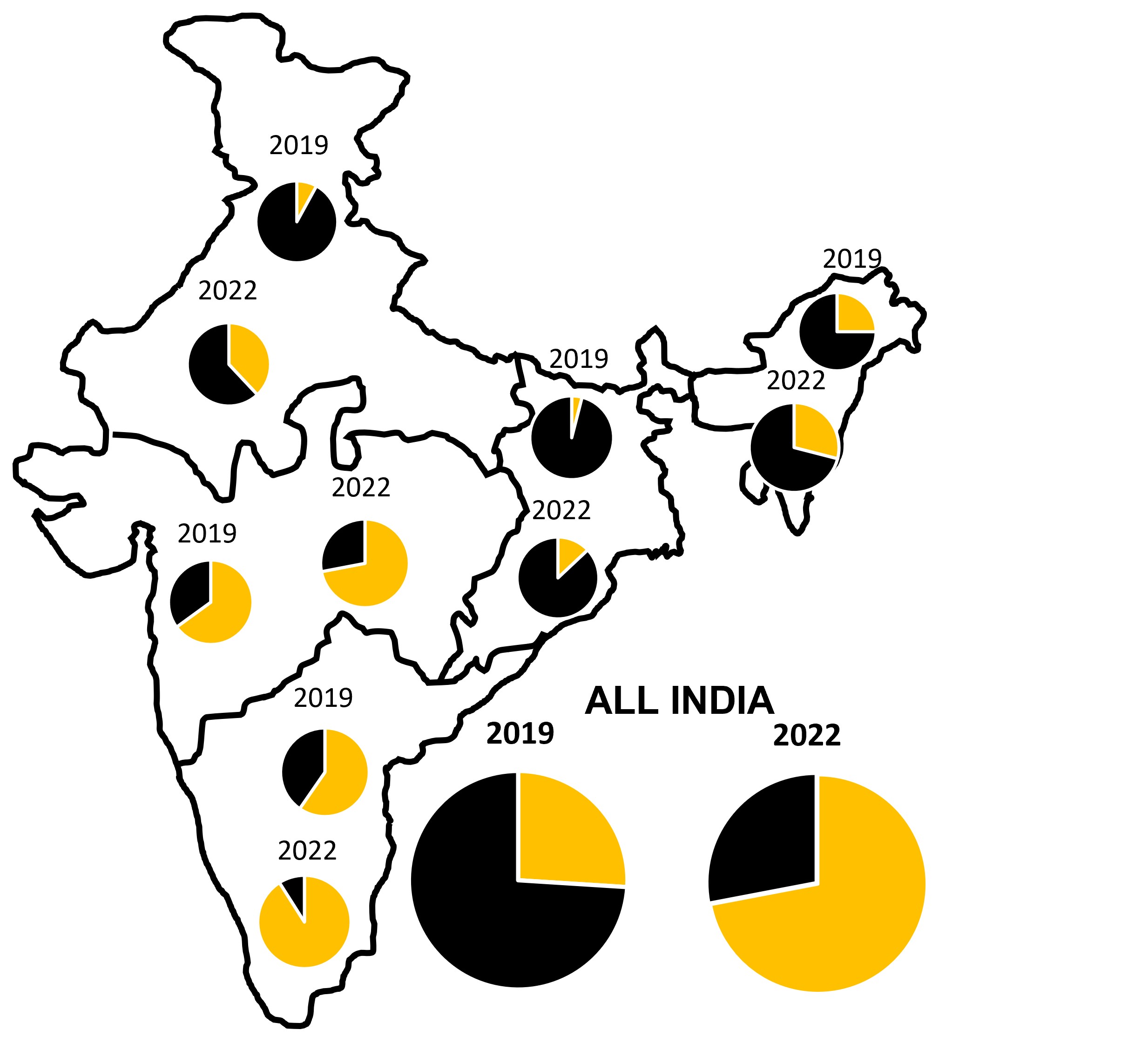

Overview
The relentless Indian summer is more than a seasonal discomfort - it’s a stress test for the nation’s power grid. By May 2024, electricity demand patterns are no longer predictable. The rise of urban households using air conditioners and electric vehicles has created a dual peak system: an afternoon peak powered largely by solar, and an evening peak when solar fades, but consumption remains high.
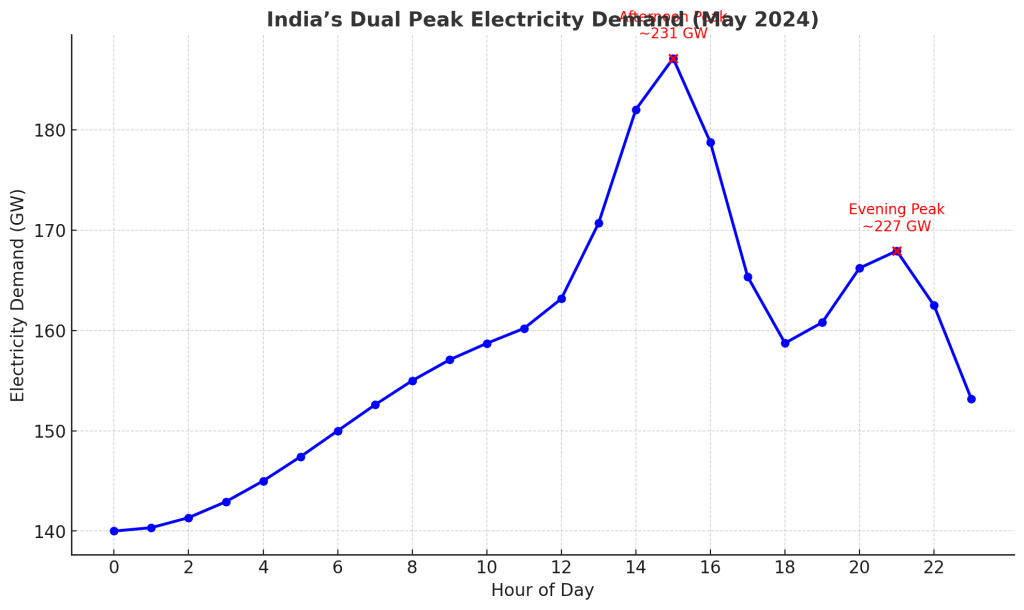
This misalignment forces a reliance on thermal power plants, with coal still generating nearly three-quarters of India’s electricity. Price volatility follows: mid-May 2024 saw power exchange prices spike to ₹10/kWh after 6 PM. Clearly, bridging the gap between renewable generation and evening demand is no longer optional - it’s critical.
Conventional Battery Risks: Why Not All Storage is Equal
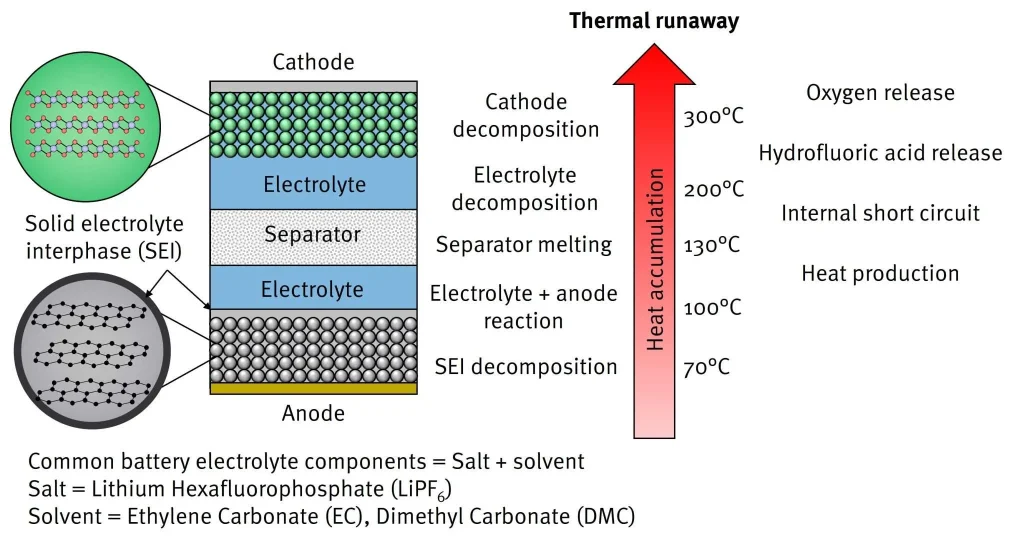
Battery storage seems like a simple solution, but not all chemistries are fit for grid-scale deployment. Traditional lithium-ion batteries using Nickel Manganese Cobalt (NMC) are prone to thermal runaway - a chain reaction of overheating that can escalate rapidly, damaging equipment and endangering lives.
Thermal runaway isn’t just a technical problem; it drives up capex and opex, requires complex safety infrastructure, and introduces logistical headaches from transportation to installation. For grid operators, this adds both cost and uncertainty, slowing deployment.
LiFePO₄ Batteries: The “Marathon Runner” of Energy Storage
Enter Lithium Iron Phosphate (LiFePO₄) batteries, engineered for safety, longevity, and reliability. Unlike NMC batteries, LiFePO₄ uses a stable olivine structure, giving it strong covalent bonds that resist overheating. Key benefits for grid applications:
- High Safety: Withstand temperatures above 200°C before thermal runaway, reducing fire risk.
- Exceptional Lifespan: 3,000–8,000 cycles, ideal for daily cycling over decades.
- Sustainability: No cobalt or nickel, easier recycling, and lower supply chain risks.
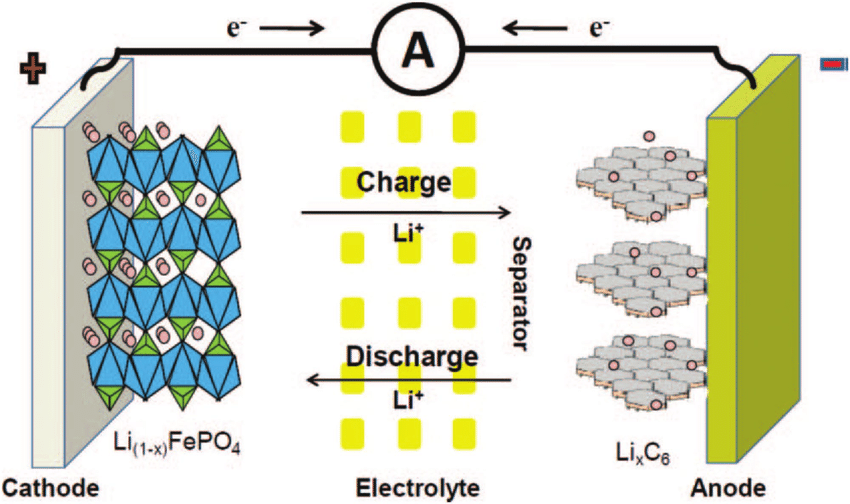
For stationary storage, slightly lower energy density is a small trade-off compared to long-term reliability and safety - a perfect fit for India’s grid challenges.
Putting Theory into Practice: Early Indian Deployments
While large-scale deployment is still emerging, India has notable projects demonstrating LiFePO₄’s potential:
- Tata Power Solar & SECI, Rajnandgaon: 100 MW solar plant + 120 MWh BESS using LiFePO₄, addressing evening peaks and providing “round-the-clock green energy.”
- JSW Energy, Rajasthan: 125 MW / 500 MWh standalone BESS in the pipeline.
- NHPC & Tata Power, Kerala: 125 MW / 500 MWh storage initiative under development.
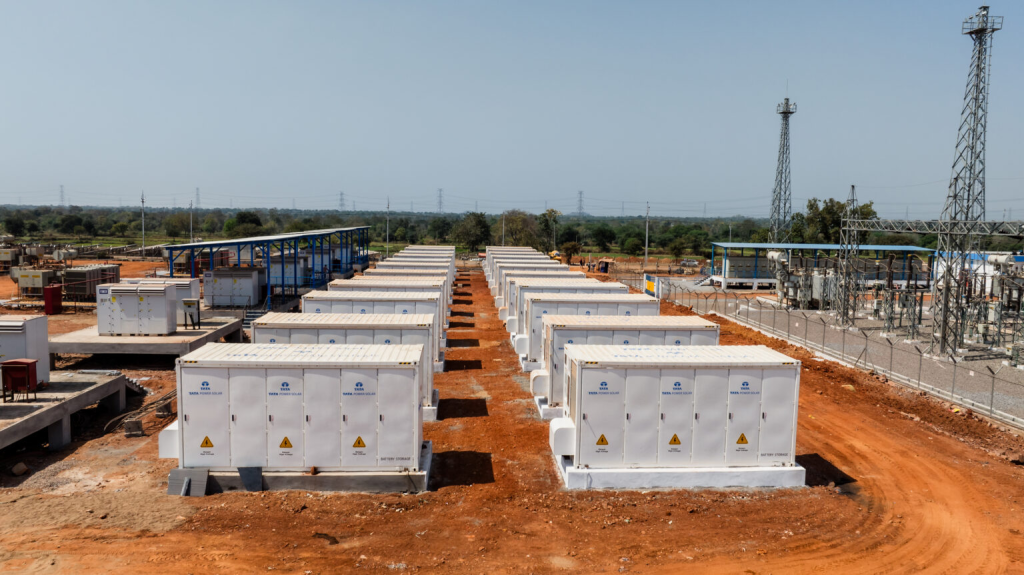
Challenges remain: PPA delays, transmission interconnection, and financing hurdles. But these pioneering projects show that technology is ready; execution is the current bottleneck.
Economics of Energy Storage: Why LiFePO₄ Makes Sense
The market for BESS is shifting from policy-driven to commercially viable:
- Falling Costs: Turnkey BESS prices have dropped 40% from 2023 to 2024, making long-term storage investments feasible.
- Revenue from Market Volatility: Dual peaks create energy arbitrage opportunities - charge during midday solar surplus, discharge during evening peak.
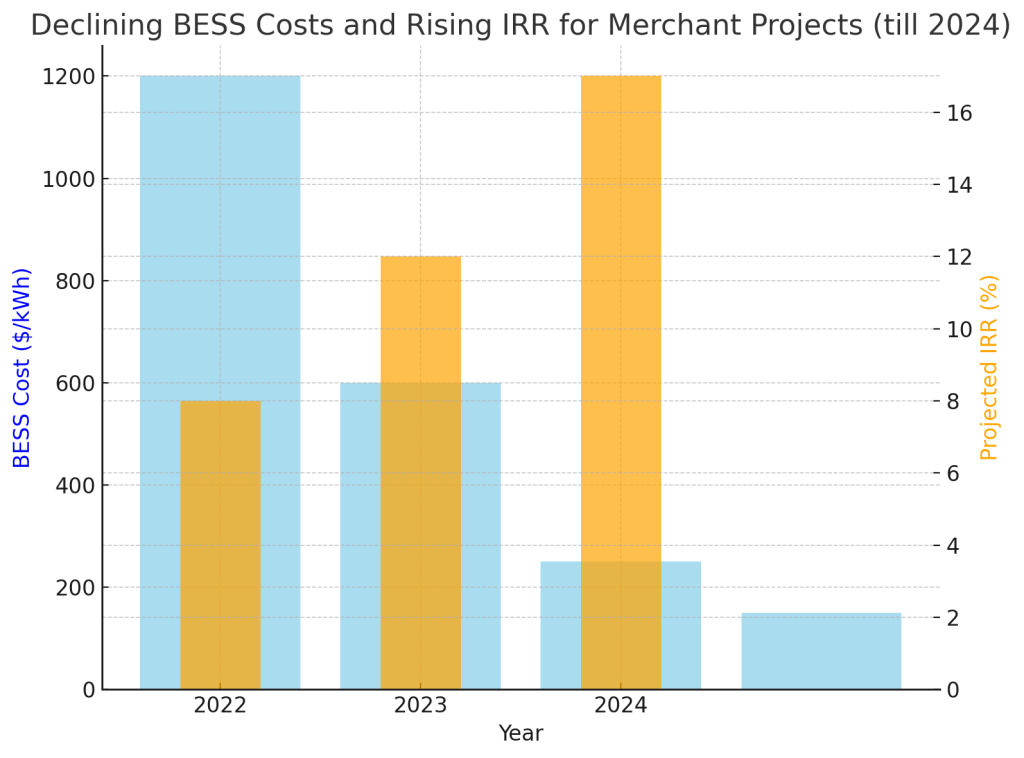
The combination of safety, longevity, and economic viability positions LiFePO₄ as the go-to chemistry for India’s grid-scale storage, supporting both renewable integration and stable, affordable electricity.
Comparing LiFePO₄ vs NMC for Grid Applications
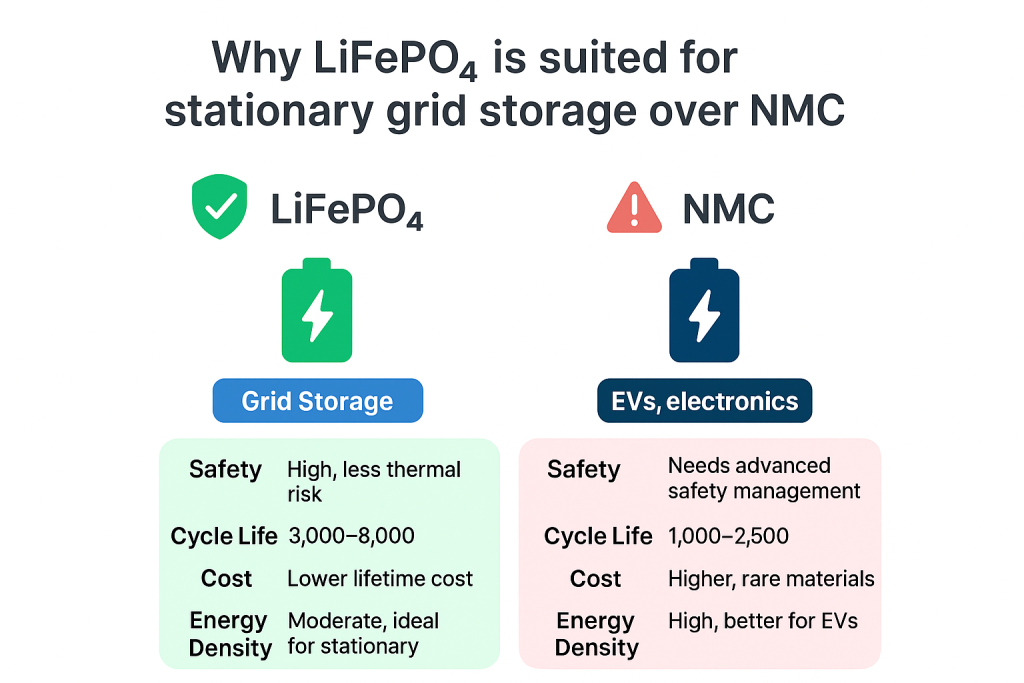
| Aspect | LiFePO₄ | NMC |
|---|---|---|
| Safety | High, less thermal risk | Needs advanced safety management |
| Cycle Life | 3,000–8,000 | 1,000–2,500 |
| Cost | Lower lifetime cost | Higher, rare materials |
| Energy Density | Moderate, ideal for stationary | High, better for EVs |
| Materials | Iron, Phosphorus, Oxygen | Nickel, Manganese, Cobalt |
| Best Use | Grid storage, e-buses | EVs, electronics |
The Road Ahead: Scaling a Safer, Smarter Grid
India’s dual-peak challenge isn’t temporary - it’s a structural shift in energy consumption. LiFePO₄ batteries offer a solution that is safe, durable, and economically viable, enabling a reliable, clean, and resilient energy system.
Future priorities include:
- Streamlining project execution and interconnection approvals.
- Expanding domestic LiFePO₄ manufacturing under the PLI scheme.
- Leveraging successful pilot projects to build investor confidence and private-sector participation.
With the right execution, India can not only meet but exceed its renewable energy goals, ensuring that the grid is not only clean and affordable but also safe and resilient for decades.