
Why Predictive Maintenance Has Become Hard to Ignore
India's electricity demand isn't climbing in those tidy, predictable steps anymore. It's surging all over the place, fuelled by air conditioners that hammer the grid harder every summer, factories that barely let up, and a digital economy that treats constant power like it's no big deal
For distribution utilities, this would already be challenging. What complicates matters further is the changing nature of supply. Solar and wind are now material contributors to generation, and while that transition is essential, it introduces volatility that legacy distribution networks were never built to absorb gracefully.
The pressure shows up first at the edges of the system: overheated transformers, stressed feeders, voltage complaints, and faults that seem routine until they suddenly aren’t.
A lot of these breakdowns aren't shocks when you look back, they are those slow-burn issues that creep up over weeks or months without anyone noticing, until the whole thing finally snaps. That's why predictive maintenance is stepping up now, not a futuristic fantasy, but a real fix for power grids that are under heavy pressure with no room for mistakes.
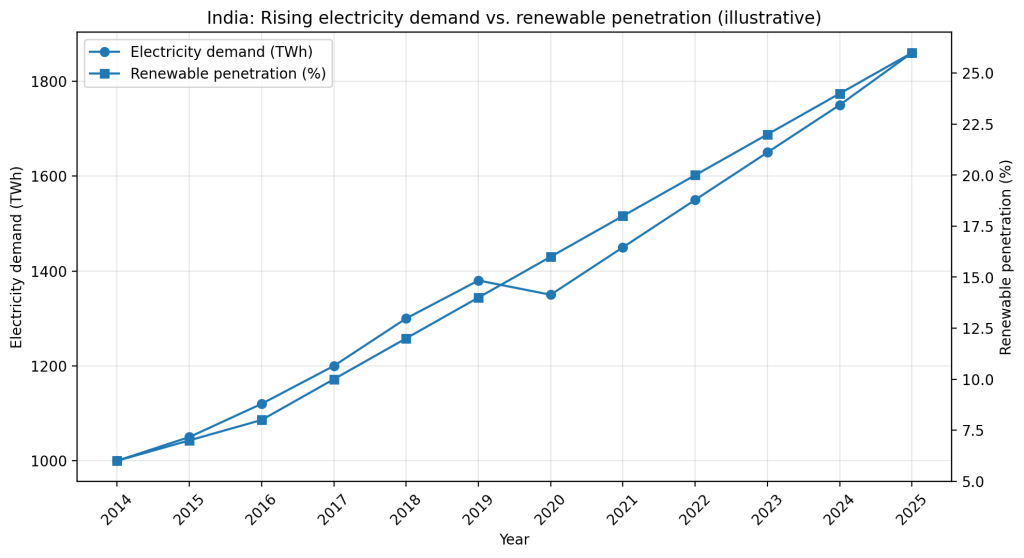
Rising demand and variable generation are putting sustained pressure on distribution
The Distribution Problem Is Less About Capacity and More About Visibility
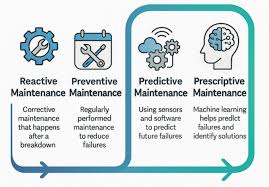
Maintenance in the distribution sector has long followed familiar patterns. Equipment fails, crews respond. Or equipment is inspected on a fixed cycle, regardless of whether it needs attention or not. Both approaches made sense when networks were simpler and demand growth was slower.
Today, they feel blunt. Reactive maintenance is expensive and disruptive. Preventive maintenance, while more orderly, often spreads limited resources thin. Healthy assets get serviced on schedule, while others fail unexpectedly between inspections.
One can see the damage in those loss figures that just won't budge. Technical and commercial losses keep draining utilities’ finances, leaving almost nothing for upgrades or reinvestment. On the ground, that shows up as overloaded transformers, repeated visits to fix the same feeders, and power faults that take longer to restore than they should.
What often gets missed in national-level discussions is the variation between utilities. Some distribution companies operate with far lower losses and fewer outages. This didn’t happen by chance. It is the result of years of steady investment in automation, better data systems, and tighter operational discipline
The difference, quite simply, is visibility. Utilities that can see what is happening on their network can act early. Those that cannot are forced to react late.
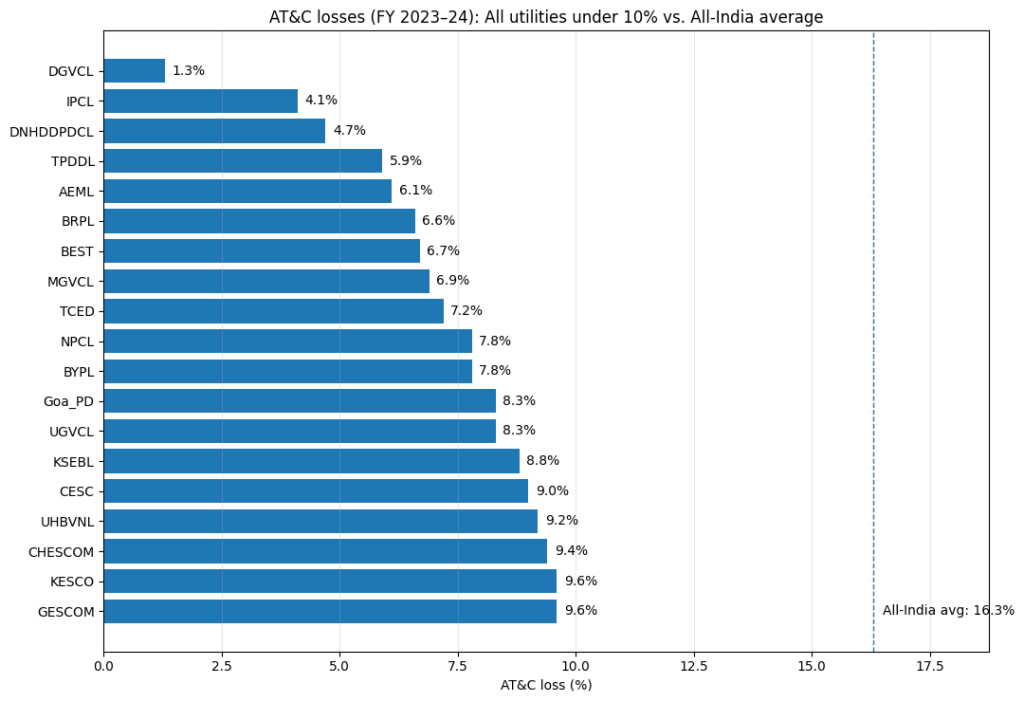
Bar chart comparing national AT&C losses with best-performing utilities
What Predictive Maintenance Actually Changes on the Ground
Predictive maintenance is often described in abstract terms, but its value is very concrete. It changes the daily rhythm of operations.
Instead of waiting for complaints or alarms, engineers receive early signals. Instead of treating all assets as equal, maintenance teams focus on the ones that actually need attention for example between power transformer and isolator the priority of power transformer as it is the heart of a substation and as well as the costliest equipment. Instead of firefighting, planning becomes possible.
Data is at the heart of this change , and a lot of it is already being collected
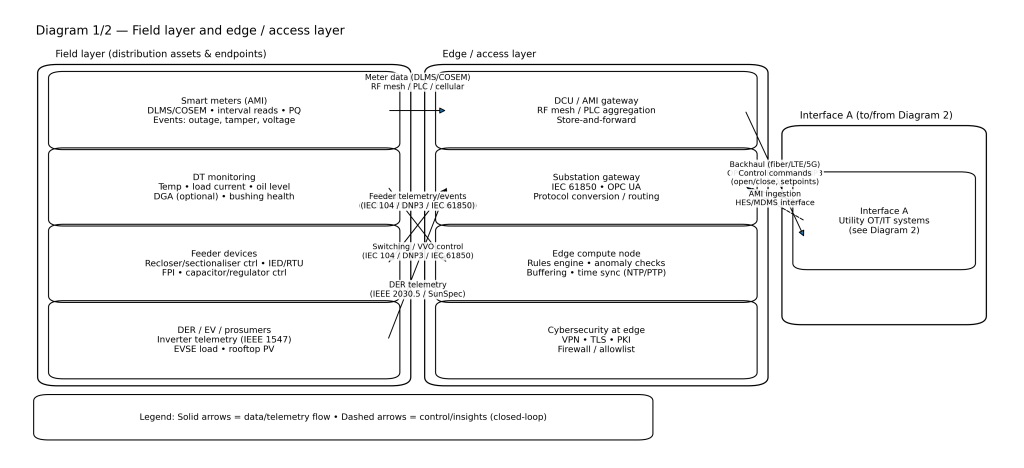
Smart meters generate detailed information on load behaviour and power quality. Transformer-mounted sensors track temperature, current, and stress. Feeder automation systems log events that, when viewed together, reveal patterns that are otherwise invisible.
The challenge has never been data availability. It has been data use.
Why Edge and Cloud Both Matter
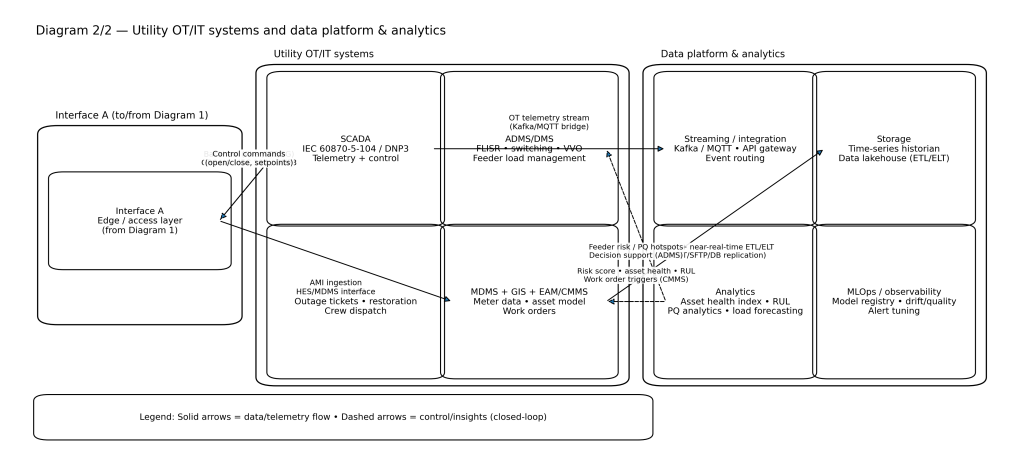
Most effective predictive maintenance setups use a hybrid approach. Some decisions need to be made instantly , such as responding to overload conditions before damage occurs. These are handled at the edge, close to the asset.
Other insights require context and history. Understanding why a transformer is degrading faster than expected, or which feeders are most vulnerable under certain weather conditions, requires data from across the network. That analysis happens centrally.
This division of labour between edge and cloud is not a design preference but it is an operational necessity. Predictive maintenance relies on fast local responses supported by deeper central analytics.
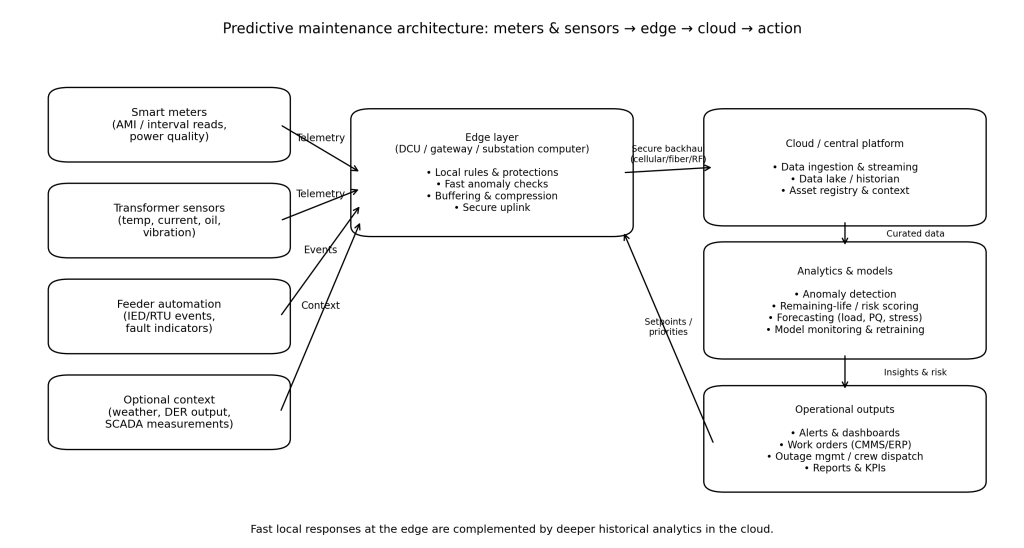
The Analytics Behind the Alerts
From a technical standpoint, predictive maintenance is less about exotic algorithms and more about disciplined application of proven techniques.
Anomaly detection models establish what “normal” looks like for each asset. When behaviour drifts , whether through rising temperatures, unusual load profiles, or power quality disturbances then the system flags it.
Time-series forecasting models go a step further. They estimate how operating conditions today are likely to affect asset health tomorrow. This allows utilities to prioritise interventions based on risk rather than habit.
What makes these systems valuable is not just detection, but learning. Every resolved fault, every inspection outcome, feeds back into the model. Over time, false alarms reduce and confidence grows.
What Early Deployments Are Showing
Predictive maintenance is no longer theoretical. Utilities that have deployed these systems are seeing consistent patterns emerge.
Transformer failures decline, particularly during peak load periods. Outages that do occur are resolved faster because fault locations are clearer. Emergency maintenance costs fall, replaced by planned interventions that are cheaper and less disruptive.
In urban networks, where load density is high, these gains are especially visible. Utilities that invested early in analytics and automation now operate with some of the lowest loss levels in the country.
Smaller-scale pilots are also delivering results. AI-powered load-sharing transformers are stopping overload failures on the cheap. They're a game-changer especially in smaller towns and rural spots, where swapping out transformers takes forever and cash is tight.
Predictive analytics is also letting utilities handle renewable ups and downs way better , sharper forecasts cut the guesswork and stop needless shutdowns
How Utilities Should Approach Adoption
The temptation to “go big” is understandable, but experience suggests a more measured path works better.
The first step is not software procurement , it is data housekeeping. Utilities that invest time in cleaning, integrating, and contextualising their data often unlock immediate insights, even before advanced models are introduced.
Pilots should be deliberately narrow. Focus on a known problem area. So, what does success look like in real terms? Fewer breakdowns, quicker fixes after outages, or skipping big-ticket upgrades altogether. Predictive maintenance doesn't side-line engineers or ground crews; it backs them up. Training folks and smoothing out the shift matter every bit as much as the tech itself
Finally, alignment with existing policy frameworks helps. Loss reduction and grid modernisation initiatives already support the kind of investments predictive maintenance requires. Leveraging these reduces both financial and execution risk.
Successful adoption follows a phased, operationally grounded approach.
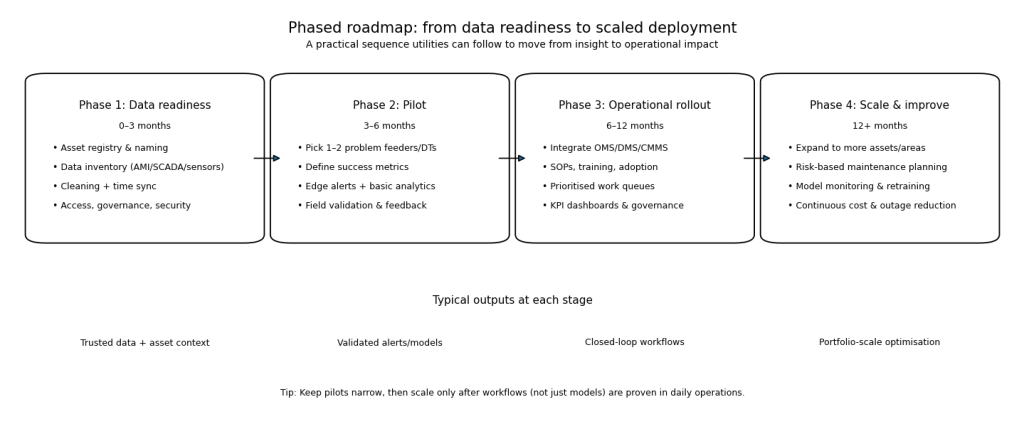
The Broader Impact on Grid Performance
Once predictive maintenance takes root, its influence spreads. Reliability improves, which strengthens consumer confidence. Financial performance stabilises as losses fall. A lot of these breakdowns aren't surprises looking back. They're slow-building headaches that sneak up over weeks or months, ignored until boom or something breaks.
That is where predictive maintenance really starts to matter, not as a distant futuristic idea but as a practical way to support overstretched grids that have almost no room for erro
A Structural Shift, Not a Sudden Leap
What is striking today is how quietly this transition is happening. There's no single "aha" moment when a grid turns smart. It builds up step by step through loads of little choices like where to put sensors, which data to rely on, and when to jump in and fix things.
Utilities using predictive maintenance aren't just chasing the latest hype. They are responding to operational reality. As demand grows and variability increases, intuition and fixed schedules are no longer enough.
The grid that is taking shape is not defined by a headline technology. It is defined by better awareness, earlier action, and fewer surprises.
And for India’s distribution sector, that shift is already well underway.
Concept illustration of an interconnected, data-driven distribution network