

A Village Finds Power Beyond the Grid
You know that feeling when a plan finally clicks? That’s what happened in a quiet corner of Rajasthan. A handful of families decided they’d had enough of waiting for someone else to fix their power woes. So they did something radical -they built their own. A small, state-backed solar plant.
Suddenly, irrigation pumps purred without diesel. Kids studied without candlelight. Shops stayed open after sunset. It wasn’t some government miracle but it was collective grit, a shared leap of faith.
Across India, we’re seeing this more often - communities taking solar into their own hands. From rooftop clusters to microgrids, states are experimenting, tweaking, and learning.
Why Community Solar Matters
India’s energy transition isn’t just about gigawatts and targets plastered on PowerPoint slides. It’s about people. Small businesses, farmers, families. Folks who can’t always afford to stick panels on their roofs or even have a proper roof to begin with. Rooftop adoption? Patchy.
Diesel use? Still everywhere.
And rural electrification? Sure, the grid’s reached, but reliability hasn’t always followed. Community solar fills that middle ground — shared ownership, shared output, shared benefit. It’s not charity. It’s participation.
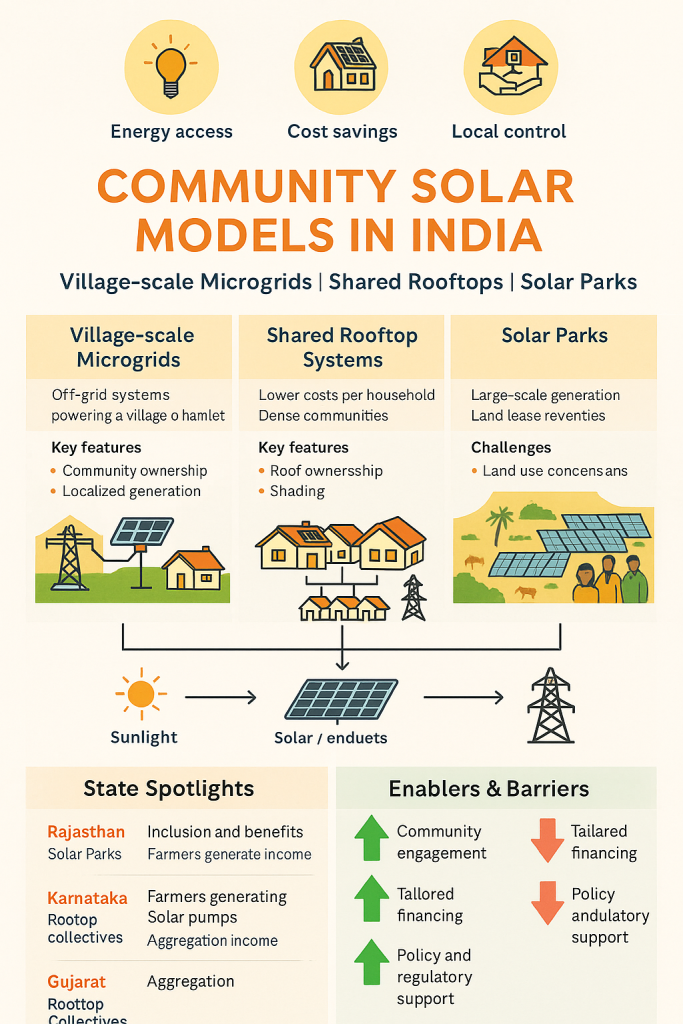
different Indian community solar models (village-level microgrids, shared rooftop systems, solar parks
India’s diverse models of community solar reflect the country’s varied energy needs
State Spotlights: What We’re Learning
Rajasthan: Solar Parks and Shared Prosperity
Rajasthan didn’t just talk sunshine — it built an economy around it. Its sprawling solar parks aren’t just feeding the grid; they’re reshaping rural livelihoods. Some villages now lease land for solar projects, earning steady income while drawing power from the same sun.
Lesson? You can’t plonk down panels on someone’s land and expect applause. Projects thrive only when people feel included — financially and emotionally.
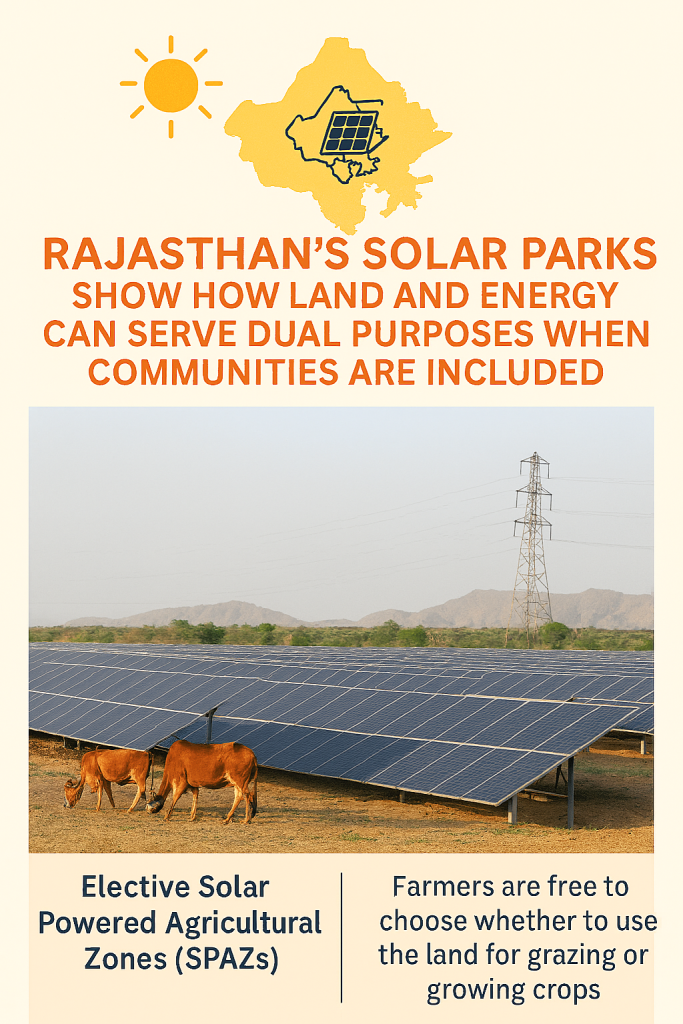
Rajasthan’s solar parks show how land and energy can serve dual purposes when communities are included
Karnataka: Where Farmers Became Energy Producers
Ever met a farmer who sells power to the grid? Karnataka’s Surya Raitha scheme made that possible. Farmers swapped diesel pumps for solar ones — and suddenly, they weren’t just irrigating crops, they were generating income.
That’s empowerment in its truest form. Solar that works for the farmer, not just the grid.
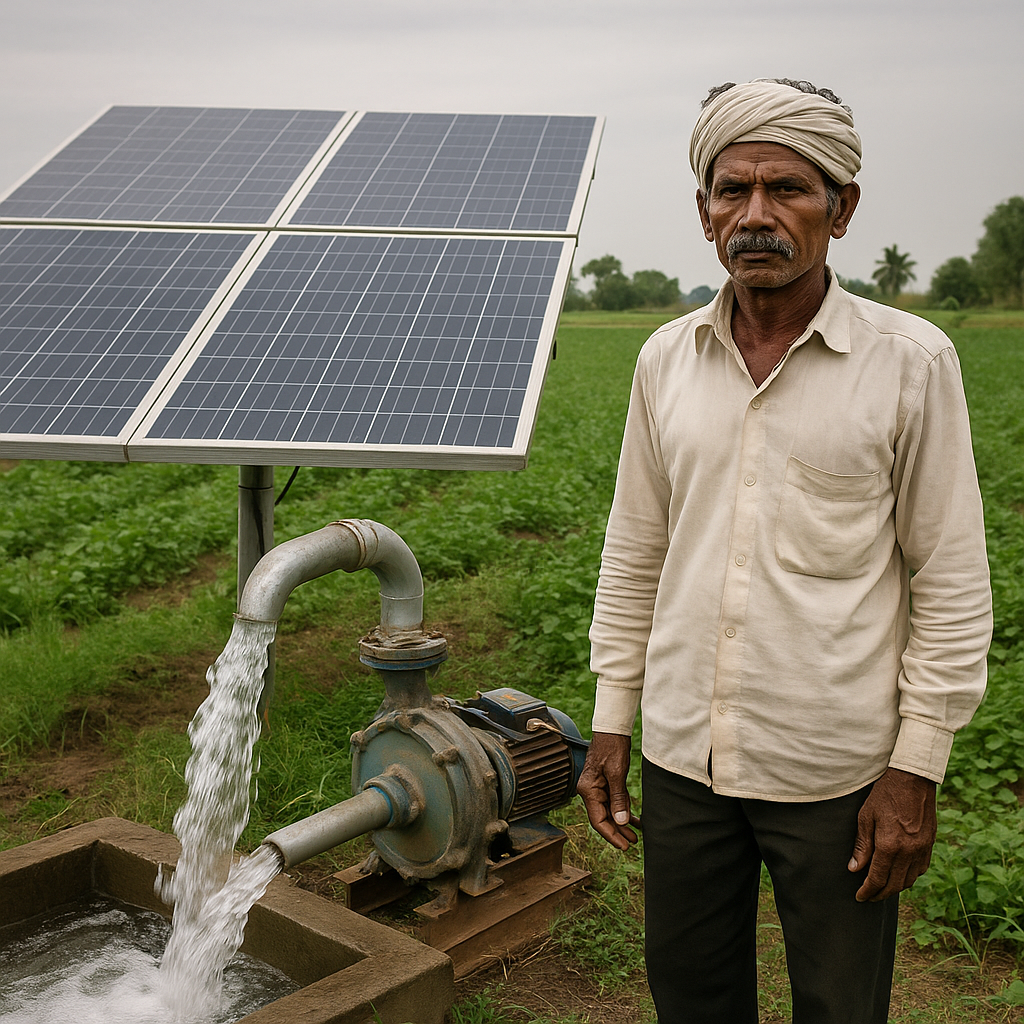
Farmers in Karnataka are turning solar energy into both water and income.”
Gujarat: The Rooftop Collectives
In Gujarat, the spirit of cooperative enterprise took a new shape — solar cooperatives. Think group net metering, shared rooftops, and pooled investment. Urban housing societies, small factories, even institutions joined hands to generate clean power.
And it worked. Aggregation trimmed costs and red tape. Everyone got a slice of the sun without the hassle of going solo.
The Practical Messiness (Because It’s Never Simple)
If only policy rolled out as smoothly as a press release.
Here’s the truth from the ground:
- Central and state rules often step on each other’s toes.
- Small consumers struggle to get loans or understand the maze of tariffs.
- DISCOMs, already walking a financial tightrope, eye solar credits warily.
- And yes — awareness? Still way too low in many districts.
None of these are deal-breakers. But they slow things down. Anyone who’s ever tried to push a community project knows — coordination is half the battle.
What’s Working — Tangible Wins
Here’s what’s happening when the stars (and stakeholders) align:
- Costs drop. Diesel bills shrink. Power bills follow.
- Reliability improves. Fewer outages, steadier supply.
- Jobs multiply. Technicians, billing agents, project managers — local employment, real incomes.
- Women step up. In several projects, women’s self-help groups manage microgrids — quietly rewriting who holds the power, literally.
This isn’t theoretical. You can see it in the numbers, sure, but also in the faces of people who now own a slice of their power supply.
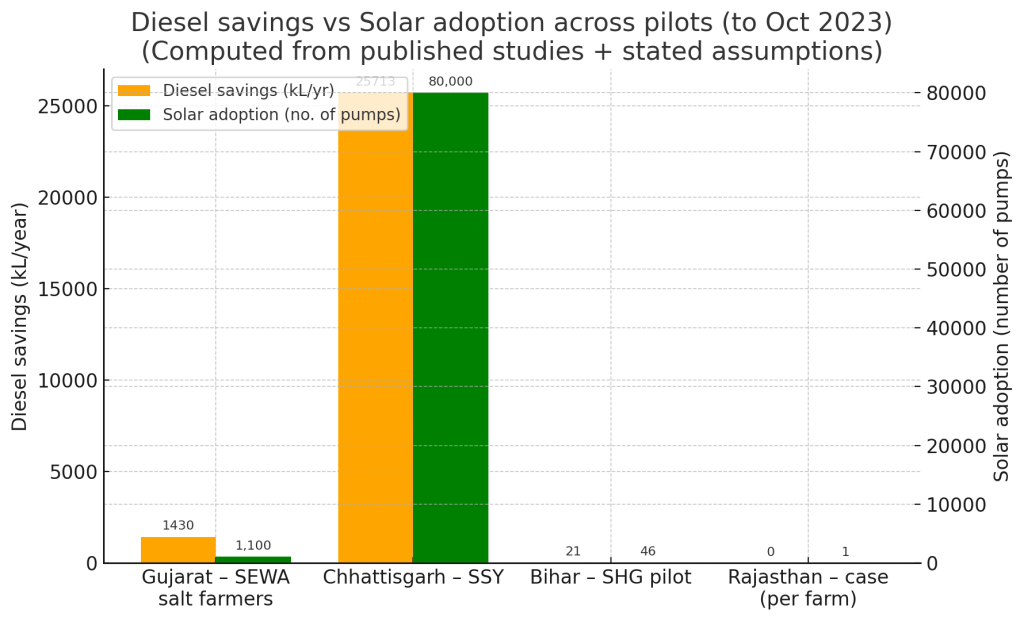
Switching from diesel to solar irrigation is delivering real savings for farmers
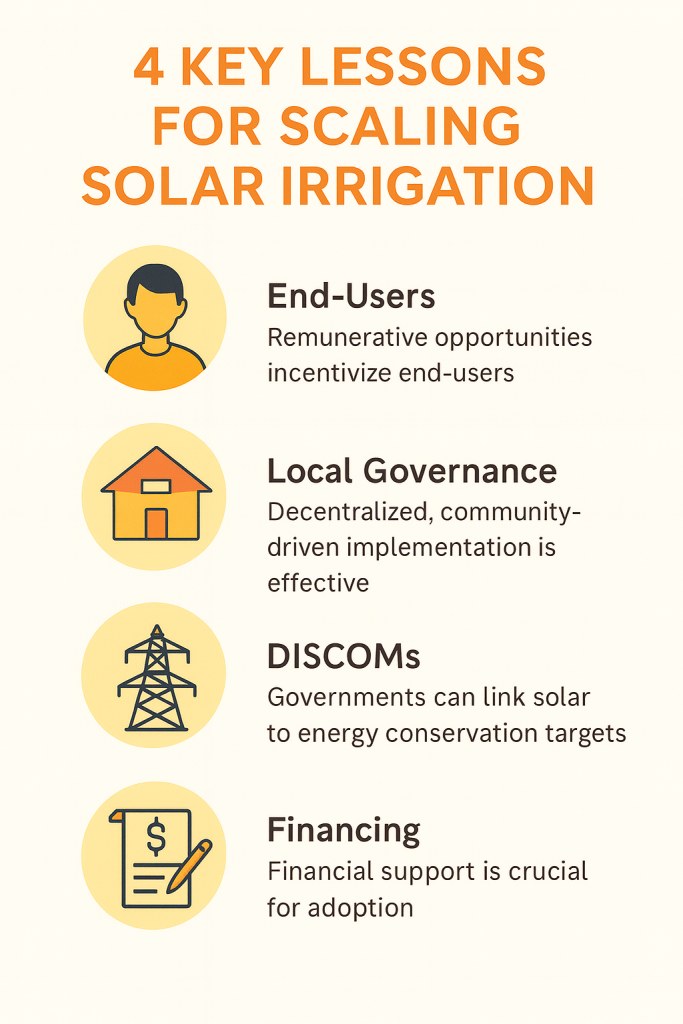
Four Things States Keep Teaching Us
- Design for people, not policy documents. Farmer-first, user-first — always.
- Keep it local. When Panchayats and cooperatives drive projects, they endure.
- Get DISCOMs onboard early. Fighting them later is a losing game.
- Finance creatively. Pay-as-you-go, leasing, microcredit — whatever it takes to cut the upfront pain.
Every success story you’ve read so far? It’s built on one or more of these. Miss even one, and the system wobbles.
The Human Side of a Solar Revolution
Let’s strip away the buzzwords. This isn’t about “green megawatts.” It’s about dignity. Autonomy. The idea that a farmer or schoolteacher shouldn’t have to wait for a diesel truck to keep the lights on.
And the future? It’s local. The real test now is scaling what works — turning pilot successes into permanent fixtures in our energy landscape.
If you’re a policymaker reading this, here’s a thought: stop designing programs for people. Design them with them. And if you’re a technologist or project developer, maybe ask a simple question — “Would I sign up for this if I lived there?”
Because that, really, is the heart of it.
Conclusion
Community solar in India is still young. Messy. Full of contradictions. But it’s also the most exciting frontier in our clean energy story. The next wave of progress won’t come from megaprojects — it’ll come from neighbourhoods, fields, and rooftops.
And maybe that’s exactly how revolutions are supposed to start.